Pages

Subscribe:

Ads 468x60px

Saturday, April 30, 2011

ಕ್ರಿಕೆಟ್‌ಗೋಸ್ಕರ ಬೀದಿಗಿಳಿಯುವ ಜನ, ಭ್ರಷ್ಟಾಚಾರದ ವಿರುದ್ದ ಇಳಿಯಲಾರರೇ?


"ನಾನು ಹೊಸ ಪಾಸ್‌ಪೋರ್ಟ್‌ಗೆ ಅರ್ಜಿ ಹಾಕಿದ್ದೆ. ನನ್ನನ್ನು ಏನೇನೋ ಕಾರಣ ಹೇಳಿ ಹನ್ನೊಂದು ಸಲ ತಿರುಗಿಸಿದರು. ಆಮೇಲೆ ಲಂಚ ಕೇಳಿದರು. ಕೊಡದಿದ್ದರೆ ಕೆಲಸ ಆಗುತ್ತಿರಲಿಲ್ಲ, ಹಾಗಾಗಿ ಕೊಡಲೇಬೇಕಾಯಿತು;" "ನಾನು ರಸ್ತೆಯಲ್ಲಿ ಬೈಕ್ ಓಡಿಸಿಕೊಂಡು ಹೋಗುತ್ತಿರುವಾಗ ಮೂವರು ಪೋಲಿಸರು ಅಡ್ಡಗಟ್ಟಿ ಬೈಕ್‌ಗೆ ಸಂಬಂಧಪಟ್ಟ   ಕಾಗದಪತ್ರಗಳನ್ನು ಕೇಳಿದರು. ನನ್ನ ಗೆಳೆಯನ ಬೈಕ್ ಆದ್ದರಿಂದ ಅವನ ಹೆಸರಿನಲ್ಲಿ ಎಲ್ಲಾ ಕಾಗದಪತ್ರಗಳಿದ್ದವು. ಈಗಲೇ ಕೇಸ್ ಹಾಕುತ್ತೇವೆ, ಎರಡು ಸಾವಿರ ರೂ. ದಂಡ ತೆರಬೇಕಾಗುತ್ತದೆ ಎಂದು ಹೆದರಿಸಿದರು. ಆಮೇಲೆ ತಪ್ಪಿಸಿಕೊಳ್ಳಬೇಕಾದರೆ, ಐನೂರು ರೂ. ಕೊಡು ಎಂದರು. ಇನ್ನೇನು ಮಾಡಲಿ? ಗಡಿಬಿಡಿಯಲ್ಲಿದ್ದ ನನಗೆ ದುಡ್ಡು ಕೊಡದೆ ವಿಧಿಯಿರಲಿಲ್ಲ. ರಸ್ತೆಯಲ್ಲಿ ದರೋಡೆ ಮಾಡುವವರನ್ನು ಹೊಡೆಯಬಹುದು, ಆದರೆ ಪೋಲಿಸರನ್ನು ಹೊಡೆಯಲು ಆಗುವುದಿಲ್ಲವಲ್ಲ?" ಎಂದು ಜೋಧ್‌ಪುರ ಹಾಗೂ ಕಲ್ಕತ್ತಾದ ಜನ ಅಸಹಾಯಕತೆ ವ್ಯಕ್ತಪಡಿಸುತ್ತಾರೆ.
ಇನ್ನು ನಮ್ಮ ಬೆಂಗಳೂರಿನಿಂದ ಒಬ್ಬರು, "ಅಂತರರಾಷ್ಟ್ರೀಯ ಡ್ರೈವಿಂಗ್ ಲೈಸನ್ಸ್‌ಗೆ ಅರ್ಜಿ ಹಾಕಲು ಹೋದರೆ ಅಲ್ಲಿನ ಅಧಿಕಾರಿಯೊಬ್ಬರು 2,500 ರೂ. ಲಂಚ ಕೇಳಿದರು. ನನಗೆ ನಿಧಾನವಾಗಿ ಲೈಸೆನ್ಸ್‌ ಸಿಕ್ಕಿದರೆ ಸಾಕು, ದುಡ್ಡು ಕೊಡುವುದಿಲ್ಲ ಅಂದಿದ್ದಕ್ಕೆ ನಿಮ್ಮ ಡ್ರೈವಿಂಗ್ ಟೆಸ್ಟ್‌ನಲ್ಲಿ ಫೇಲ್ ಆಗಬಹುದು, ದುಡ್ಡು ಕೊಟ್ಟುಬಿಡಿ ಎಂದರು. ಆಮೇಲೆ ಸಾವಿರದ ಐನೂರು ರೂ. ಕೊಡಲೇ ಬೇಕಾಯಿತು" ಅಂದರೆ ಇನ್ನೊಬ್ಬರು, "ಕರ್ನಾಟಕ ಸರಕಾರದಲ್ಲಿ ಉದ್ಯೋಗಿಯಾಗಿದ್ದ ನನ್ನ ತಂದೆ ತೀರಿಹೋದ ಆರು ತಿಂಗಳಾದ ಮೇಲೂ ಅವರ ಬಾಕಿ ಪೆನ್ಶನ್ ಹಣವನ್ನು ಕೊಟ್ಟಿಲ್ಲ. ಸಂಬಂಧಪಟ್ಟ ಅಧಿಕಾರಿಯ ಹತ್ತಿರ ಅಲೆದೂ ಅಲೆದೂ ಸಾಕಾಯಿತು. ಕೇಳಿದರೆ ನಾನು ಸಹಾಯ ಮಾಡುತ್ತೇನೆ, ಆದರೆ ಲಂಚ ಕೊಡಬೇಕೆನ್ನುತ್ತಾರೆ. ನಮ್ಮಂತಹ ಸಾಮಾನ್ಯ ಜನ ಅವರು ಹೇಳಿದ ಹಾಗೆ ಕೇಳದೆ ಇನ್ನೇನು ಮಾಡಲು ಸಾಧ್ಯ?" ಎಂದು ತಮ್ಮ ಅಳಲು ತೋಡಿಕೊಳ್ಳುತ್ತಾರೆ.
ಮೇಲೆ ಕೊಟ್ಟಂತಹ ನಿದರ್ಶನಗಳ ತರಹದ ಅನುಭವಗಳು ಎಲ್ಲರಿಗೂ ಒಂದಲ್ಲ ಒಂದು ಹಂತದಲ್ಲಿ ಆಗಿರುತ್ತವೆ. ಭ್ರಷ್ಟಾಚಾರದ ಕಥೆಗಳು ಸಣ್ಣ ಪ್ರಮಾಣದಲ್ಲೇ ಆಗಿರಬಹುದು, ಇಲ್ಲಾ ಕೋಟ್ಯಾಂತರ ರೂಪಾಯಿಗಳನ್ನೊಳಗೊಂಡ 2ಜಿ ಹಗರಣ, ಕಾಮನ್‌ವೆಲ್ತ್ ಗೇಮ್ಸ್‌, ಆದರ್ಶ ಸೊಸೈಟಿ, ಸತ್ಯಂ, ಐಪಿಎಲ್‌ನಂತಹ ಬೃಹತ್ ಪ್ರಮಾಣದ ಕಥೆಗಳೇ ಆಗಿರಬಹುದು. ಆದರೆ ಒಂದೇ ಸಮಾಧಾನದ ವಿಷಯವೆಂದರೆ ಸಣ್ಣ ಪ್ರಮಾಣದ ಭ್ರಷ್ಟಾಚಾರದ ಬಗ್ಗೆ ಕೋಪ ಇಟ್ಟುಕೊಂಡೂ ಅಸಹಾಯಕರಾಗಿ ಸುಮ್ಮನಿದ್ದ ಸಾಮಾನ್ಯ ಜನರಲ್ಲಿ ಈಗ ಅಸಹನೆ ಶುರುವಾಗಿದೆ.
ಫೇಸ್‌ಬುಕ್‌, ಟ್ವಿಟ್ಟರ್, ಆರ್ಕುಟ್‌ನಂತಹ ಸಾಮಾಜಿಕ ಸಂಪರ್ಕಜಾಲಗಳನ್ನು ಉಪಯೋಗಿಸುವವರಿಗೆಲ್ಲ ಈ ಒಂದು ತಿಂಗಳಲ್ಲಿ ಒಂದು ಸಂದೇಶ ತಲುಪಿರುತ್ತದೆ- ಭ್ರಷ್ಟಾಚಾರ ತೊಲಗಿಸಲು ಜನ ಲೋಕಪಾಲ ಮಸೂದೆಯನ್ನು ಜಾರಿಗೆ ತರುವಂತೆ ಒತ್ತಾಯಿಸಿ ಹಿರಿಯ ಗಾಂಧಿವಾದಿ ಅಣ್ಣಾ ಹಜಾರೆ ಏಪ್ರಿಲ್ ಐದರಿಂದ ಅನಿರ್ಧಿಷ್ಟಾವಧಿಯ ಉಪವಾಸ ಸತ್ಯಾಗ್ರಹ ಮಾಡುತ್ತಿದ್ದಾರೆ. ಅದನ್ನು ನಿಮ್ಮ ಊರುಗಳಲ್ಲಿ, ಪಟ್ಟಣಗಳಲ್ಲಿ, ಮನೆಗಳಲ್ಲಾದರೂ ಸರಿ, ನೀವೂ ಬೆಂಬಲಿಸಿ, ನಿಮ್ಮ ಕೈಲಾದ ಮಟ್ಟಿಗೆ ನೀವೂ ಉಪವಾಸ ಮಾಡಿ ಈ ಸತ್ಯಾಗ್ರಹದಲ್ಲಿ ಭಾಗವಹಿಸಿ ಎಂದು. ಅಣ್ಣಾ ಹಜಾರೆಗೆ ಬೆಂಬಲವಾಗಿ ನಿಲ್ಲಲು ಎಲ್ಲಾ ಕಡೆ ಸಮಾಜ ಸೇವಕರು, ಸಾಮಾನ್ಯ ಜನರು ಬದ್ಧರಾಗಿ ನಿಂತಿದ್ದಾರೆ. ಹಜಾರೆ ಉಪವಾಸ ಸತ್ಯಾಗ್ರಹ ಆರಂಭಿಸುವ ಜಂತರ್ ಮಂತರ್‌ಗೆ ಬರಲಾಗದಿದ್ದರೆ ಪರವಾಗಿಲ್ಲ, ನಿಮ್ಮ ನಿಮ್ಮ ಮನೆಗಳಲ್ಲಿ, ಕೆಲಸ ಮಾಡುವ ಸ್ಥಳಗಳಲ್ಲಿ ಆ ಒಂದು ದಿನವಾದರೂ ಉಪವಾಸ ಮಾಡಿ ಎನ್ನುತ್ತಿದಾರೆ ಆ ಆಂದೋಲನದ ಹರಿಕಾರರಾದ ಕಿರಣ್ ಬೇಡಿ ಮತ್ತು ಅರವಿಂದ ಕೇಜ್ರೀವಾಲ್.
ಅಣ್ಣಾ ಹಜಾರೆ ಎಂದು ಜನರಿಂದ ಪ್ರೀತಿಯಿಂದ ಕರೆಯಲ್ಪಡುತ್ತಿರುವ ಕಿಸನ್ ಬಾಬುರಾವ್ ಹಜಾರೆ ಉಪವಾಸ ಸತ್ಯಾಗ್ರಹ ಮಾಡಿ ಸೋತ ಉದಾಹರಣೆಗಳಿಲ್ಲ. ಹಜಾರೆ ಉಪವಾಸಕ್ಕೆ ಕೂತಾಗಲೆಲ್ಲ ನಮ್ಮ ಸರಕಾರಗಳು ನಡುಗಿವೆ. ಮಹಾರಾಷ್ಟ್ರದ ಆರು ಭ್ರಷ್ಟ ಮಂತ್ರಿಗಳನ್ನು ಕಿತ್ತೊಗೆಯಲಾಗಿದೆ, ನಾನೂರು ಅಧಿಕಾರಿಗಳು ಕೆಲಸ ಕಳೆದುಕೊಂಡಿದ್ದಾರೆ, ಮಹಾರಾಷ್ಟ್ರದಲ್ಲಿ ಮಾಹಿತಿ ಹಕ್ಕು ಕಾಯಿದೆ ಜಾರಿಗೆ ಬಂದಿದೆ ಹಾಗೂ ಕೇಂದ್ರೀಯ ಮಾಹಿತಿ ಹಕ್ಕು ಕಾಯಿದೆಯ ತಿದ್ದುಪಡಿ ಮಾಡುವ ನಿರ್ಧಾರವನ್ನು ಕೇಂದ್ರ ಸರ್ಕಾರ ವಾಪಾಸು ಪಡೆದುಕೊಂಡಿದೆ.
ಭಾರತದಂತಹ ಯಾರಿಗೆ ಏನಾದರೂ ಡೋಂಟ್ ಕೇರ್ ಮನೋಭಾವನೆ ಇರುವ ದೇಶದಲ್ಲೇ ರಾಜಕಾರಣಿಗಳ ಬೆವರಿಳಿಸಿರುವ ಎಪ್ಪತ್ತೈದು ವರ್ಷದ ಹಜಾರೆ ಕೇವಲ ಒಬ್ಬ ಬಡ ಕಾರ್ಮಿಕನ ಮಗ. ಮಿಲಿಟರಿಯಲ್ಲಿದ್ದು ಬಂದ ಮೇಲೆ ಸ್ವಾಮಿ ವಿವೇಕಾನಂದರ ಪುಸ್ತಕವೊಂದನ್ನು ಓದಿ ಪ್ರಭಾವಿತರಾದ ಹಜಾರೆ ತನ್ನ ಊರನ್ನು ಉದ್ದಾರ ಮಾಡಲು ಯತ್ನಿಸಿದರು, ಅದರಲ್ಲಿ ಯಶಸ್ವಿಯೂ ಆದರು. ತನ್ನ ಊರಿಗೆ ಶಾಲೆ ಮಂಜೂರು ಮಾಡಲು ಸರ್ಕಾರ ಒಪ್ಪದಿದ್ದಾಗ ಹಜಾರೆ ಉಪವಾಸ ಶುರುಮಾಡಿದರು ಮತ್ತು ತನ್ನ ಯತ್ನದಲ್ಲಿ ಯಶಸ್ವಿಯಾದರು. ಅಲ್ಲಿಂದ ಶುರುವಾದ ಹಜಾರೆ ಯಶೋಗಾಥೆ ಪರಿಸರ ಸಂರಕ್ಷಣೆ, ಕುಡಿತದ ನಿರ್ಮೂಲನೆಯಂತಹ ಸಾಮಾಜಿಕ ಪಿಡುಗುಗಳನ್ನು ನಿವಾರಿಸುವಲ್ಲಿಂದ ಈಗ ಭ್ರಷ್ಟಾಚಾರದ ವಿರುದ್ಧ ಹೋರಾಟದವರೆಗೆ ಬಂದು ನಿಂತಿದೆ.
ಪ್ರಧಾನಿ ಮನಮೋಹನ್ ಸಿಂಗ್ ಕೇವಲ ರಿಮೋಟ್ ಕಂಟ್ರೋಲ್ ಎನ್ನುವ ಹಜಾರೆ, ಸರ್ಕಾರದ ಲೋಕಪಾಲ ಮಸೂದೆ ಭ್ರಷ್ಟ ರಾಜಕಾರಣಿಗಳನ್ನು, ಅಧಿಕಾರಿಗಳನ್ನು ಶಿಕ್ಷಿಸುವ ಬದಲಾಗಿ ರಕ್ಷಿಸುವ ಉದ್ದೇಶದಿಂದ ತಯಾರಾಗುತ್ತಿದೆ ಎನ್ನುತ್ತಾರೆ. ಲೋಕಪಾಲ ಮಸೂದೆಯಡಿ ಲೋಕಪಾಲರಿಗೆ ಯಾವುದೇ ಸ್ವತಂತ್ರ ಕ್ರಮ ಕೈಗೊಳ್ಳುವ ಅಧಿಕಾರ ಇರುವುದಿಲ್ಲ, ಬರಿ ಸಲಹೆ ಕೊಡಬಹುದಷ್ಟೆ. ಸರ್ಕಾರದ ಮಸೂದೆಯಡಿ ಲೋಕಪಾಲರಿಗೆ ಅಧಿಕಾರವಿರುವುದು ಕೇವಲ ರ್ರಾಜಕಾರಣಿಗಳ ಮೇಲೆ ತನಿಖೆ ನಡೆಸಲು, ಅಧಿಕಾರಿಗಳ ಮೇಲಲ್ಲ. ಜೊತೆಗೆ ತಪ್ಪಿತಸ್ಥರ ಬಗ್ಗೆ ಸುದ್ದಿ ಕೊಡುವವರಿಗೆ (Whistleblowers) ಇಲ್ಲಿ ಯಾವುದೇ ರಕ್ಷಣೆಯಿಲ್ಲ. ಅದರ ಬದಲಾಗಿ ಕರ್ನಾಟಕ ಲೋಕಾಯುಕ್ತ ಸಂತೋಷ್ ಹೆಗ್ಡೆ, ಸುಪ್ರೀಂ ಕೋರ್ಟ್ ವಕೀಲ ಪ್ರಶಾಂತ್ ಭೂಷಣ್ ಹಾಗೂ ಸಮಾಜ ಸೇವಕ ಅರವಿಂದ ಕೇಜ್ರೀವಾಲ್ ಜಂಟಿಯಾಗಿ ತಯಾರಿಸಿರುವ ಜನ ಲೋಕಪಾಲ ಮಸೂದೆ ಭ್ರಷ್ಟ ರಾಜಕಾರಣಿಗಳು ಹಾಗೂ ಅಧಿಕಾರಿಗಳು ಇಬ್ಬರ ಮೇಲೂ ಸೂಕ್ತ ಕ್ರಮ ಕೈಗೊಳ್ಳಲು ಲೋಕಪಾಲರಿಗೆ ಹೆಚ್ಚಿನ ಅಧಿಕಾರ ಕೊಡುತ್ತದೆ, ಅದರಿಂದ ಸರ್ಕಾರದಲ್ಲಿ ಪಾರದರ್ಶಕತೆ ತರಲೂ ಅನುಕೂಲವಾಗುತ್ತದೆ. ಲೋಕಪಾಲರ, ಲೋಕಾಯುಕ್ತರ ನೇಮಕಾತಿಯಲ್ಲಿ ರಾಜಕಾರಣಿಗಳು ತಲೆ ಹಾಕುವಂತಿಲ್ಲ, ಎನ್ನುತ್ತಾರೆ.
ಅವರು ಹೇಳೋದರಲ್ಲೂ ಅರ್ಥವಿದೆ. ಹಲ್ಲಿಲ್ಲದ ಹುಲಿಗೆ ಬೇಟೆ ಹಿಡಿದು ಕೊಟ್ಟರೇನು ಉಪಯೋಗ? ಈಗ ಸರ್ಕಾರ ತರಲು ಹೊರಟಿರುವುದೂ ಅಂತಹುದೇ ಒಂದು ಮಸೂದೆ. ಮೊದಲೇ ಸಿಬಿಐ, ಕೇಂದ್ರ ವಿಚಕ್ಷಣಾ ದಳಗಳಂತಹ ಸಂಸ್ಥೆಗಳು ರಾಜಕಾರಣಿಗಳ ಹಿಡಿತದಲ್ಲಿವೆ, ಅವುಗಳಿಂದ ಭ್ರಷ್ಟಾಚಾರದ ಪಾರದರ್ಶಕ ವಿಚಾರಣೆ ಸಾಧ್ಯವಿಲ್ಲ ಎನ್ನುವ ಆರೋಪ ಹೊತ್ತಿರುವಾಗ, ಇನ್ನೊಂದು ಸಂಸ್ಥೆಯನ್ನು ಹುಟ್ಟುಹಾಕಿ ಅದರ ಚುಕ್ಕಾಣಿ ಹಿಡಿಯುವ ಲೋಕಪಾಲರಿಗೆ ಸ್ವತಂತ್ರ ಅಧಿಕಾರ ಕೊಡದಿದ್ದರೆ ತಪ್ಪು ಮಾಡಿದವರನ್ನು ಹಿಡಿದೂ, ಶಿಕ್ಷೆ ಕೊಡಲು ಅಧಿಕಾರವಿಲ್ಲದ ನಮ್ಮ ರಾಜ್ಯದ ಲೋಕಾಯುಕ್ತ ಸಂಸ್ಥೆಯ ತರವೇ ಅದೂ ಹತ್ತರಿಂದ-ಐದು ಕೆಲಸ ಮಾಡಿ ಸಂಬಳ ಎಣಿಸಿಕೊಳ್ಳುವ ಒಂದು ಸರ್ಕಾರಿ ಸಂಸ್ಥೆಯಾಗಿ ಮಾರ್ಪಡುತ್ತದೆ. ಕೇಂದ್ರ ಚುನಾವಣಾ ಆಯೋಗವನ್ನು ರಾತ್ರೋರಾತ್ರಿ ಬದಲಿಸಿದ ರಾಜಕಾರಣಿಗಳ ನಿದ್ದ್ಗೆಡಿಸಿದ ಟಿ.ಎನ್. ಶೇಷನ್, ಸರ್ಕಾರ ತನ್ನ ಕೆಲಸಕ್ಕೆ ಅಡ್ಡ ಬಂತೆಂದು ಭ್ರಷ್ಟ ಐಎ‌ಎಸ್, ಐಪಿಎಸ್ ಅಧಿಕಾರಿಗಳ ಹೆಸರುಗಳನ್ನು ಕೇಂದ್ರ ವಿಚಕ್ಷಣಾ ದಳದ ವೆಬ್‌ಸೈಟ್‌ನಲ್ಲಿ ಪ್ರಕಟಿಸಿದ ಅಲ್ಲಿವರೆಗೆ ಅಸ್ಥಿತ್ವದಲ್ಲಿರುವುದರ ಅರಿವೇ ಇರದ ವಿಚಕ್ಷಣಾ ದಳದ ಎನ್. ವಿಟ್ಟಲ್, ತನ್ನ ಕೆಲಸ ಮಾಡಲು ರಾಜಕಾರಣಿಗಳ ಒಪ್ಪಿಗೆಯ ಅಗತ್ಯವಿಲ್ಲ ಎಂದು ಹೇಳಿ ಧೀರೂಭಾಯಿ ಅಂಬಾನಿ ಮನೆಯ ಮೇಲೆ ದಾಳಿ ಮಾಡಿದ ಸಿಬಿಐ ಡೈರೆಕ್ಟರ್ ಆಗಿದ್ದ ತ್ರಿನಾಥ್ ಮಿಶ್ರಾ ಇಂಥ ದಕ್ಷ ಅಧಿಕಾರಿಗಳಿದ್ದ ಸಂಸ್ಥೆಗಳು ಈಗ ಪೂರ್ತಿಯಾಗಿ ಬದಲಾಗಿವೆ. ಈಗ ಲೋಕಪಾಲ ಮಸೂದೆ ತಂದರೆ, ಅದಕ್ಕೂ ಇದೇ ಗತಿ. ದಕ್ಷ ಅಧಿಕಾರಿಗಳಿರುವವರೆಗೂ ಯಾವ ಸಂಸ್ಥೆಯಾದರೂ ಪ್ರಾಮಾಣಿಕವಾಗಿಯೇ ಕೆಲಸ ಮಾಡುತ್ತದೆ. ಈಗಿರುವ ಸಂಸ್ಥೆಗಳನ್ನೇ ಶುಚಿಗೊಳಿಸಿ ಅವುಗಳ ಅಧಿಕಾರ ವ್ಯಾಪ್ತಿಯನ್ನು ಹೆಚ್ಚಿಸಿದರೆ ಮಾತ್ರ ನಮ್ಮ ಸಾಮಾಜಿಕ ವ್ಯವಸ್ಥೆ ಸರಿಯಾಗುತ್ತದೆ.
ಜೈನ್ ಹವಾಲಾ ಹಗರಣವನ್ನು ೧೯೯೫ರಲ್ಲಿ ಬೆಳಕಿಗೆ ತಂದ ಪತ್ರಕರ್ತ ವಿನೀತ್ ನರೇನ್‌ರನ್ನು ಮೊನ್ನೆ ಜನವರಿಯಲ್ಲಿ ನಡೆದ 'ಭ್ರಷ್ಟಾಚಾರದ ವಿರುದ್ದ ನಡಿಗೆ' ಆಂದೋಲನದಲ್ಲಿ ಯಾಕೆ ಭಾಗವಹಿಸಲಿಲ್ಲ ಎಂದು ಯಾರೋ ಕೇಳಿದಾಗ ಅವರು ಕೊಟ್ಟ ಉತ್ತರ, "ಎಷ್ಟು ಆಂದೋಲನಗಳು ನಡೆದರೂ ನಮ್ಮ ವ್ಯವಸ್ಥೆ ಸರಿಯಾಗುವುದಿಲ್ಲ. ಅದಕ್ಕೇ ನಡಿಗೆ ನಡೆಯುವ ಸ್ಥಳಕ್ಕೆ ಹೋಗಿ ವಾಪಾಸು ಬಂದೆ."
ಕಾಂಗ್ರೆಸ್ ಅಧ್ಯಕ್ಷೆ ಸೋನಿಯಾ ಗಾಂಧಿಯವರ ಕಚೇರಿಯಲ್ಲೇ ಪಕ್ಷದ ಟಿಕೆಟುಗಳು ಮಾರಾಟವಾಗುತ್ತಿವೆ ಎಂದು ಕೇರಳ ಕಾಂಗ್ರೆಸ್ ಹಿರಿಯ ನಾಯಕ ಮಾಜಿ ಆರೋಗ್ಯ ಸಚಿವ ಕೆ. ರಾಮಚಂದ್ರನ್ ಆರೋಪ ಮಾಡಿದ್ದಾರೆ. ಕಾಂಗ್ರೆಸ್‌ನ 'ಕಾಸಿಗಾಗಿ ಓಟು' ಹಗರಣದಲ್ಲಿ ಕಳೆದ ವರ್ಷ ಪದ್ಮಭೂಷಣ ಗೌರವ ಸ್ವೀಕರಿಸಿದ ವ್ಯಕ್ತಿಯ ಹೆಸರೂ ಕೇಳಿಬರುತ್ತಿದೆ. ಭಾರತೀಯ ಸ್ಟೇಟ್ ಬ್ಯಾಂಕ್‌ಗೆ ಸುಮಾರು 41 ಕೋಟಿ ರೂಪಾಯಿ ವಂಚಿಸಿದ ಪ್ರಕರಣದಲ್ಲಿ ಸಿಬಿಐಯಿಂದ ಬಂಧನಕ್ಕೊಳಗಾಗಿದ್ದ ಅನಿವಾಸಿ ಭಾರತೀಯ ಸಂತಾ ಸಿಂಗ್ ಛತ್ವಾಲ್ ಕ್ರಿಮಿನಲ್ ಕೇಸು ಎದುರಿಸಿದವರು. ಇಂತಹ ಸರ್ಕಾರದ ಪ್ರಯತ್ನ ಎಲ್ಲಿಯವರೆಗೆ ಸಫಲವಾಗುತ್ತದೆ? ಆ ಪ್ರಯತ್ನದ ನಿಜವಾದ ಉದ್ದೇಶವಾದರೂ ಏನು?
ಆದರೂ ಇಂತಹ ಪ್ರಶ್ನೆಗಳ ನಡುವೆಯೂ ನಾವು ಅಣ್ಣಾ ಹಜಾರೆಗೆ ಬೆಂಬಲ ಸೂಚಿಸಬೇಕು, ಉಪವಾಸ ಮಾಡಿ ಅಥವಾ ದಿನನಿತ್ಯದ ಭ್ರಷ್ಟಾಚಾರಗಳ ವಿರುದ್ದ ಪ್ರತಿಭಟಿಸಿ. ಈಜಿಪ್ಟ್‌ನಲ್ಲಿ ಸರಕಾರವನ್ನೇ ಬೀಳಿಸಿದ ಸಾಮೂಹಿಕ ಕ್ರಾಂತಿ ಕೂಡ ಫೇಸ್‌ಬುಕ್‌ನ ಒಂದು ಸಣ್ಣ ಸಂದೇಶದಿಂದಲೇ ಶುರುವಾಯಿತು ಎನ್ನುವುದನ್ನು ನಾವು ಮರೆಯಬಾರದು. ಜನರ ಅಸಹನೆ ಒಂದು ಆಂದೋಲನವಾಗಿ ಮಾರ್ಪಟ್ಟರೆ ಅದಕ್ಕಿಂತ ದೊಡ್ಡ ಚಳುವಳಿಯ ಅಗತ್ಯವಿಲ್ಲ. ಕ್ರಿಕೆಟ್‌ಗೋಸ್ಕರ ಬೀದಿಗಿಳಿಯುವ ಜನ, ಭ್ರಷ್ಟಾಚಾರದ ವಿರುದ್ದ ಇಳಿಯಲಾರರೇ?

Monday, April 18, 2011

TAGORE'S GORA LEADS US TOWARDS CONTEMPLATION


Pic. by Hampa Nagaraj
"Why should a man, except as a means of livelihood, desire to act on the stage when he has the whole world to act in, is not clear to me," mused British playwright George Bernard Shaw. He should, however, have seen the play 'Gora' by Rangayana artistes for answer.

Intense in its storyline and character portrayal, the experimental play is based on a novel of the same name by Rabindranath Tagore, which was considered an epic by its own strength.
This year's Bahuroopi theatre festival became a stage where 'Gora' stood up from within the confines of the pages of the book and spoke to the audience — of himself, his principles, his vision and his truth.
Rangayana's veteran artistes, with years of practice of metamorphosing into the characters they are enacting, took up the challenge of portraying a difficult story set in Bengal during the days of British Raj.
'Gora' brings out the tumultuous atmosphere that prevailed in those days as Indians tried to both accept liberal ideas and refused to let go of old customs and traditions. It was a transition period and the Bengali society was divided into the liberal thinkers who formed the Brahmo Samaj and the traditional orthodox Hindus.
Rangayana's Prashanth Hiremath, the protagonist who portrayed Gora in the play, fills the entire stage with his towering personality as both an overzealous Hindu who hates vehemently all things outside Hindu tradition and yet is humane in his attitude.
It is natural that all forms of the society have their own contradictions and hypocrisies. The Brahmin family to which Gora 'belongs' and Poresh Babu's family which follows Brahmo Samaj are continuously at crosshairs because of their conflicting viewpoints. The story is woven with sub-stories, inter-plots on freedom struggle not just against the British but also within oneself. But though the characters openly defy Anglo-rule, they cannot find a way out of their inner conflicts.
Gora, who is a strong advocate of Hinduism and a natural leader, in time becomes an aggressive, arrogant, self-opinionated person who thrusts his opinions on others and expects them to follow. But occasionally he lets us take a peep into his heart where he is intensely patriotic and strongly wishes for an ideal India where the downtrodden are upheld by humanity irrespective of caste, creed and colour.
His stubbornness in upholding his orthodox beliefs and confusion about his blooming love towards Poresh Babu's daughter Sucharita conflict each other. But it finally resolves itself when he comes to know the truth about his identity — that he is the son of an Irish couple and not of Brahmin parents, as he believed.
The moment that steals the show comes when Gora accepts his origins and discards not only his religious symbols including the sacred thread and unknots his tuft, but also his fanaticism towards Hinduism, especially Brahminism and becomes a true human and, more importantly, free.
The play, though beautifully staged, is at times dragging due to numerous vociferous monologues by Gora which seems preachy and at such times, even the booming voice of Prashanth Hiremath fails to hold the attention of the audience.
Saroja Hegde, Pramila Bengre, Nandini, Krishnaprasad and other artistes take the play to its logical end through their effective depiction of the characters of a British India.
Tagore advocates the freedom of expression lacked by women of those days through the characters of Sucharita and Lolita. The play also comes out as a strong voice against the atrocities committed by the British against our farmers, mostly unnoticed and uncared for by the high class Indian society. Though a difficult story which especially is uncontemporary, Gora convinces us that the purpose of theatre is not just to entertain and educate, but also leading us towards contemplation.

Friday, March 11, 2011

Making Mysore University safe for women


The paths of knowledge and intellect in Manasagangotri, where once advocates of literary, art and science trod upon, are slowly turning into mere roads where all the noble ideas of the architects of the University have turned into mere dust. The Mysore University is caught in accusations of sexual harassment and casteism. Though harassment to women students is not new in the Varsity, it is shocking that a woman research student went to the extent of attempting suicide allegedly unable to bear the mental torment meted out to her by her Professor and Research Guide.
Only last year, a Journalism Professor of the University who faced sexual harassment charges was transferred back into his parent department after mere warning and a comment on service register. If he is going to serve the same department till retirement, such comments and warning will do no good and will only help in convincing the guilty that his actions will go unpunished, encouraging him to commit more such actions.
Out of the 26 cases of sexual harassment registered with the Women Harassment Complaints Committee of the University, not even one case has seen its logical end; with none of the guilty being punished or booked. Such uncaring attitude of the University in letting off the guilty easily naturally causes fear and hesitation in the victims of sexual harassment, to come forward and complain. The other important matter that is being overlooked by the University authorities in such cases is victim protection. As there is rarely any protection given to the victims of sexual harassments, the women fear retribution.
A group of women students in the Sociology Department of the Delhi University conducted a study on sexual harassment in 1996. The results were shocking - about 92 per cent of women interviewed, reported of being sexually harassed during their campus life. The landmark Vishaka judgement of the Supreme Court not only identified the consequences of "sexual" harassment on the individual victim, but also recognised its debilitating effects on the entire communtiy.
A Professor was beaten up by students in the Government Agriculture College, Khandwa, Madhya Pradesh yesterday on molestation charges. At a place where a teacher is seen as akin to parents and god, a situation should not arise where students take up the matter of punishing the guilty into their own hands.
Hence, the solution to sexual harassment in Universities should not only be creating awareness in girl students about the need to come out bravely and speak up against the harassment they suffered, but also creation of an 'autonomous' committee which foresees such complaints and acts without pressure from within the University or outside. This will not only bring the guilty, whether it is the accuser or the accused, to book, but also create a sense of safety in the students.
Above all, a knowledge centre such as a University should be a safe place for a woman, who enthusiastically comes in pursuit of knowledge. Just advocating girl education on stage and through various schemes and failing to create a safe place for women at the centres of education will result in defeating the very concept of education.

Friday, February 18, 2011

Home is where the heart lies: A singular government sanctuary for kids


Someone once said that we worry about what a child may become tomorrow, but we forget that he is someone today. There are some children who have been abandoned by the world, who have no loved ones to think of fulfilling their dreams — of the present and the future.
They are orphans with no families, sometimes separated due to various circumstances or forced to leave their homes or have no one to turn to. As a result, they wander in the streets, work when they can, eat when they find something edible and sleep on street sides when they get tired.
Such children who are found alone or helpless are brought by the public, Police or sent by the court to Children's Homes (Balamandira) run by the Department of Women and Child Development [At present, N.R. Vijay, who is the Deputy Director of the Department, heads the overall management of the institutions].
Mysore city has two such Homes, one each for boys and girls. When I visited the Children's Home for Girls situated on Lalitha Mahal Road, it was a pleasant change from the pre-conceived notion of a government-run institution.
The mansion, which houses the Girls Home, is called Chikkaramane as it belonged to the Maharajas' family. The building is a heritage one, built around 1915 as a residence for E.W. Fritchley, the architect and consulting engineer who designed Lalitha Mahal Palace. At present, it houses 79 girls between 6 and 18 years of age.
Pic.by M.S. Apuurva
The Home was actually started in 1958 to give shelter to children whose parents died in war, says Rangamani, a Probation Officer. Later it was modified to include the children of single  parents  and broken families,  orphans, run-aways and neglected children. Some parents also bring their children when they are no longer in a position to look after them. The family members can visit the children whenever they wish.
The Child Welfare Committee (CWC), working under the Department of Women and Child Development, decides who should be admitted to the Home after verifying the child's background like the presence or    absence of a family, financial and emotional condition of the family and thus their need to stay in the Home. Anybody can bring the child they find crying on the road-side or lost and wandering.
Home enquiry
A Home enquiry is conducted twice weekly — on Tuesdays and Fridays— where it will be decided if the new child should be kept at the Home or sent somewhere else. Before the enactment of Ju-venile Justice Act 2000, children could only be sent here through Observation Homes or transferred from Homes in other districts or States and the Children's Homes did not have the freedom to admit children directly.
After 18 years, the parents of the child (if any) will take them home. If the children do not have any family, they will be sent to the State Home where they will either be trained in desired vocational courses or aided in getting jobs. Girls are even married off with full expense paid by the government.
Rangamani cites an example of a girl married off by the officials recently at the State Home in city. She recollects another happily married former inmate who came to visit the Home with her child. Most of the girls, who have lived at the Home, have now gone on to become higher officials in government departments apart from taking up the job of nurses, teachers etc.
Girls who have committed crimes are extremely rare here, and for that matter anywhere. Underage brides, that is those who have married before 18 years, are also sent here. Children who have been sent to the Home by the court will be in safe custody till the case ends and then their fate is decided.
The Home
Those who expect disorder and chaos in a government institution are in for a disappointment as the large two-storeyed Balamandira is well-maintained under the supervision of Superintendent Geethalakshmi. Apart from the occasional peeping cockroach, the kitchen, rooms and bathrooms are hygienically maintained. HOPCOMS provides vegetables every day, says Hemavathi, a Teacher who looks after the kids' education. About 25 litres of milk and curds are   fed to satiate the children's appetite while books donated by visitors feed their curious minds along with TV and games.
Academics & other activities
With a view to give an opportunity for children at the Home to mingle with other children, they are being sent to a school in Kurubarahalli and the People's Park College. Two of them are even studying BBM course. Teachers provide tuitions to the kids at the Home itself every morning and evening before and after regular school.
One of the girls who bagged distinction in the exams was awarded cash prize recently by the Chief Minister. Not only academically, the kids at the Home also excel in extra-curricular activities. Some kids have donned theatre colours in the Maya Kudure play and another drama staged at Shravanabelagola. They have also taken part in the Bala Vikasa Academy's Prathi-bha Karanji contests and won many prizes. They have actively participated in the Dharwad festival and Shimoga's Sahyadri festival. They are being trained by the staff themselves.
The children have also taken part in Himalayan trekking expedition. The kids are taken occasionally on excursions, especially during Children's Day when celebrations are conducted for a week. Rangamani says buses for the tours are sometimes provided by donors. Earlier, the Police used to provide vehicles for tours.
Rehabilitation
As a means of rehabilitating the girls, computer training has been started along with tailoring and other courses. Earlier, JSS Jan Shikshana Sansthan provided training in various courses including cooking, mehendi designs, embroidery in greeting cards etc. There are several instances of girls setting up their own business like tailoring after they go out of the Home.
Counselling
Psychologists and social  workers provide twice-a-week counselling to new entrants. However, the Home needs permanent psychiatrists as the  psyche of a child who is away from parents and family is fragile. Most children who come here are from troubled backgrounds like broken families. They need constant psychological monitoring as they tend to get depressed.
The posts of psychologists, psychiatrists and staff nurse are lying vacant. Doctors come for frequent health check-up. But it is surprising that doctors were, until very recently, being given only Rs.125 honorarium per month.
Rangamani narrates an incident of a girl who was transferred in an extremely unhealthy condition to the Home from Bangalore. She was found to be very fragile and under-weight. When she was admitted to hospital, it was found that she was suffering from tuberculosis and would have died if left untreated. After a lengthy treatment, she is now a healthy girl studying in high school and had recently taken part in Himalayan trekking.
At a time when private institutions create a lot of hype about the social service and humanitarian works they take up occasionally, it is commendable that there is a government institution which is silently parenting these children, who are in no position to help themselves.
Home for Boys
The Home for Boys is located in JP Nagar. As it is being run since its inception in rented buildings, there is a constant shifting from one building to another, with no adequate rooming facilities for the more than 50 boys and staff.
Though the government has granted land for the Boys' Home in Vijayanagar, fund for the construction of the building is yet to be released and before that, the Home may have to be shifted to another building once again.
The boys, who live in cram-ped quarters amidst the din of vehicular movement, find it hard to study. They go to nearby Nachanahallipalya School with two boys going to college. The facilities for the children and the admission procedures are similar to that of Girls' Home. The boys get additional computer and ITI training.
It is difficult to comprehend the psychology of children, which can never be predicted. They sometimes run away from the school during lunch break for no reason and get caught, says Probation Officer Sudha adding that the kids have to be gently convinced that running away is not an option. Both mentally depressed and normal children are being counselled regularly here.
Many boys from the Boys' Home are pursuing higher education and secured good jobs. One is even working abroad after doing BE and MBA.
The children who run away from the Home not only end up wandering the streets but also get caught in the vicious net of child traffickers, who sell them to hotel owners and sex workers. According to a survey by a newspaper in Bangalore in 2009, children are sold every morning in Bangalore for about Rs.1,200 each, which may have increased by now.
Today's need is to protect children from such dangers, apart from hunger, home-lessness and lack of love at home, which are the causative factors that make the kids try to escape.
[As per the law, no outsider is allowed to take photographs of the children in the Homes.]

Sunday, January 30, 2011

Lingambudhi: A Dying Lake?

Mysore is known not only for its culture royale, but also for its sleepy little nooks and corners around the city which often allures those who wish to break away from the daily grind and relax. We have the Chamundi Hill which retains its enigma even when thousands of tourists step on it, parks, lakes and solitary roads paved with lush green trees. Karanji lake, well-known for its shaded ambience and Kukkarahalli lake, for its winged guests, are the only two out of the five major lakes in city that have seen development till now.
The oft-heard but elusive Lingambudhi lake has come under spotlight now with the announcement by the government that it will be restored and the 20-acre park around it developed on the lines of Lalbagh in Bangalore.
For those who wish to visit Lingambudhi Lake and have failed to locate it, the lake is situated in the midst of Ramakrishna Nagar and Srirampura. Spread over an area of 260 acres, it is the biggest and oldest lake in Mysore.
History
Said to be built in 1828 by Krishnaraja Wadiyar III for Sri Mahalingeshwara Temple nearby and named after his wife Lingajammanni, the lake served as a village tank on the outskirts of the then Mysore. Its water was used for irrigation, drinking, for washing clothes and also for religious worship by the people of Lingambudhi Palya.
Bird haven
The lake was once frequented by bird-watchers and nature enthusiasts for its wide species of birds and bio-diversity. The lake area had numerous breeding grounds for migratory birds which were undisturbed by human activity. It was recognized as one of the 446 important bird breeding areas in India by Birdlife International. Nearly 250 species of birds visited the lake earlier including a few endangered species such as the Spot-billed Pelican (Near Threatened), Indian Darter, Pin-tailed Duck, Shoveler, White-rumped Vulture (Critically Endangered), Greater Spotted Eagle (Vulnerable) and Eastern Imperial Eagle (Vulnerable) etc. along with 49 species of butterflies.
However, in recent years, the number of birds arriving here from many countries during winter and summer seasons has declined as water dries up in summer and the remaining water is contaminated with sewage from surrounding areas.  In the year 2000, a large number of birds died at the lake due to unchecked sewage flow.
It is an irony that after the death of birds, the district administration chalked out various programmes like turning the lake into a bird sanctuary, creating a green buffer zone around the lake, complete diversion of waste water and treatment before letting it into the lake etc., which have remained empty promises after a decade. It was discovered then that toxins causing Avian Botulism [which causes paralysis in birds and kills them] was present in the water of the lake. But even now, after 10 years, no proactive measure has been taken.  
According to Kukkarahalli Lake Protection Committee Convenor K.M. Jayaramaiah, the lake which was mainly used for providing drinking water to the citizens of the surrounding areas earlier, became redundant when electricity was obtained for the city in 1910 and Cauvery water and borewell water could be pumped to the homes.
He warned that the water level of the lake is receding due to leakage and if it is left unchecked, it would have a devastating effect on the marine life and aquatic birds that nest on the lake's banks. Also, experts fear that human activity through the development of the Botanical Garden may lead to birds shifting their habitats from the lake area.
Park
The lake has 20 acres of park area which is in a dilapidated state with no maintenance from the Forest Department under which it comes. A portion of the foreshore area of the lake has been developed into the park for recreational purposes with walking paths and two paragolas (shelters with circular seating arrangements), stone benches, watchmen shed, two watch towers etc.
Lingambudhi lake and its environs are reported to be host to more than 150 species of flora. The foreshore vegetation comprises of more than 75 species of medicinal plants along with trees such as eucalyptus, sandalwood, gooseberry, Singapore Cherry, Tamarind and Gobli.
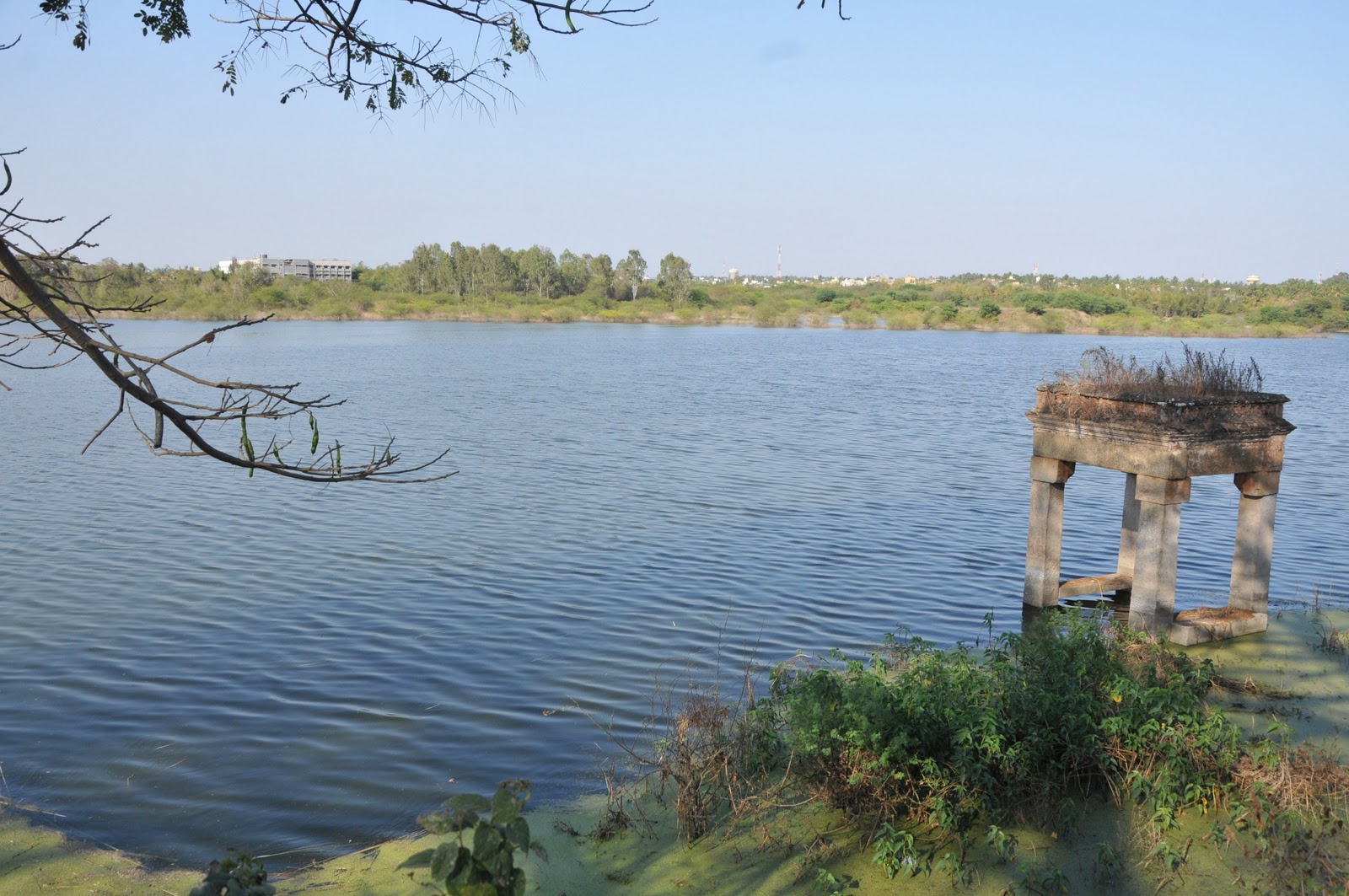
There is a pillared and carved structure with steps going down upto the water margin, built as part of the lake bund in 1828 AD that was used by the women folk of the erstwhile royal family for bathing in the lake waters and as a place to rest and enjoy the serene beauty of the lake and its environs.
Now, as there is a proposal to develop a Lalbagh-type garden here, it is yet to be seen whether the park will be revitalized soon or the project will stagnate as it happened with the restoration of Kukkarahalli Lake, which is on death bed due to unbridled sewage water flow into the lake; putting to waste the crores of rupees grant provided by the government.
A slow death
Now the lake is facing a slow death with growing urbanization. The lake area too has shrunk in size owing to site allotment and housing schemes of HUDCO and MUDA. [The first layout initiated was Kuvempunagar Stage-I in 1983 at a distance of 3.5 km from the lake. By 1989, two more layouts -- Ramakrishnanagar and Vivekanandanagar had been formed within a one km radius of the lake in the erstwhile village of Dattagalli]. It has become a dumping yard of urban waste in the form of sewage water from the surrounding Ramakrishna Nagar, Dattagalli I Block and Srirampura etc. There are two tertiary storm water drains emptying into the lake along with smaller channels which were built to carry rain water. But they only carry sewage water into the lake now. According to a survey by the Karnataka State Pollution Control Board (KSPCB), the pollution levels in Lingambudhi and Dalvoy lakes have reached alarming proportions; if Dalvoy lake is the most polluted in Mysore, Lingambudhi comes second. The pollution has been found to be four times more than the permissible limits.
The weed and blue-green algae which are covering the lake surface in alarming proportions [see picture] are suffocating the fish and other aquatic animals in the lake by creating BOD [Biological Oxygen Demand], says Jayaramaiah.
Preservation
The management techniques for lakes which are both capable of restoring urban water bodies and making them environment-friendly are quite challenging. The urgent priority of the Forest Department should be to protect the land around the lake through suitable fencing amd preventing contamination of water.
Only two lakes, Karanji and Kukkarahalli Lakes were restored under the Asian Development Bank (ADB) grants during the year 2003-2004. Out of Rs. 6 crore, over Rs. 3.5 crore had to be returned to ADB as the local authorities for lacked sustained efforts towards restoration. However, even after ‘restoration,’ the Kukkarahalli lake is still on a dying path with sewage water continuing to trickle into the lake from surrounding areas. Now the lake restoration should be planned as ecological security zones to improve urban eco-system.
The renovated park should have playground for children and facilities for exercise along with ticketing system to regulate the visitors ad curb illegal activities, said Jayaramaiah. He added that foreshore area management is crucial for lake development and that rain water should be let in instead of sewage to rejuvenate the lake through a natural process.
DCF Sukumar, when contacted, said the plans to restore Lingambudhi lake and upgrade the park are afoot and that it will take some months before finalizing the plans and starting the work.

Saturday, January 29, 2011

Fighting corruption?

It is a sad day for our country when we will have to sit as mute spectators watching the news unfold on TV screen that a person who stood up to fight against crime and corruption is brutally burnt alive. Does not our blood boil? Why are we like this? How can we forget that Yashwant Sonawane, an Additional DC, was burnt alive by the oil mafia? How to forget the death of Shanmugam Manjunath, an Engineer in the Indian Oil Corporation, who was shot dead near Lucknow for investigating adulterated fuel. How did we manage to forget Satyendra Dubey who was killed for fighting corruption in highway project at Bihar. It is true that public memory is very short. We talk about it, discuss it, write about it and forget it. That is the extent of our public participation in fighting corruption. Because we know that once we raise our voices, we too may meet the same fate. Observing Anti-Corruption Day is meaningless and futile. It frustrates me that people talk 'high and dry' about corruption and call the public to wake up and fight corruption. After alighting from the stage, they go back to paying bribes to all and sundry to get their works done. It is frustrating to know we cannot do anything. I read today about the illegal money hoarding of the Gandhi family and Sonia Gandhi. And again I felt frustrated that we are helpless. Tell me what to do?

Sunday, January 2, 2011

BEHIND THE LENS WITH SATHYU: "Theatre should be continuous

He is a celebrated name in the Indian cinema and theatre. A reference to Mysore Srinivas Sathyu or M.S. Sathyu, as he is famously called, brings to one's mind the flowing white beard, ever-vigilant eyes and a quick smile. Mysore's own filmmaker, Sathyu has indulged in almost all creative arenas of filmdom and theatre including direction, writing, acting and stage designing.
Now 80-years-old, Sathyu has been dabbling with black, white and 'silver' on and off for decades. Though he has directed many films and plays, he is easily recognised through Garam Hawa (1973), which won him the Padma Shri. His other ventures include films Bara (1980), Chithegu Chinthe, Haqeeqat (1964) and Train to Pakistan and the recent art film Ijjodu.
The theatre doyen was in city recently along with ace cinematographer G.S. Bhaskar for a four-day workshop on 'Visual Design in Theatre and Cinema' at Dhvanyaloka, Bogadi Road, organised under the joint auspices of Mysore Film Society and Bangalore's LACE Films. In a tete-a-tete with me, Sathyu dwells on the impact of theatre and films on the public.
M.S. Sathyu. Pic.by M.S. Apuurva
Shwetha: You are actively involved in theatre. There was a time when Bangalore was well-known for theatre activities. But theatre is not as dynamic now as it was earlier.
M.S. Sathyu: It is not true. Lots of theatre activities are happening at present in Karnataka and Maharashtra, but only some amount in Delhi. However, theatre activity in Kolkata is quite bad and it has become seasonal. In Delhi, the National School of Drama (NSD) and Sangeet Natak Academy organise theatre festivals. As they are government sponsored, there is no entry fee. Hence, the Delhi audience has lost the habit of buying tickets. I think theatre can survive only if the audience buy tickets.
However, what is happening in Rangashankara in Banga-lore is laudable. They are in their 6th year and stage plays everyday except on Mondays. The public do not bother about what play is being staged. They just come and watch them. The entry ticket cost some Rs. 49 earlier but has become Rs. 80 now. And Rs. 80 is not too much when we consider watching movies in multiplexes which cost us much more.
Theatre should be continuous. It should not be restricted to weekend or seasonal plays. If plays are staged everyday, people will start coming.
Shwetha: At Rangayana, they stage weekend plays, most of them old. Experimentation in theatre has become rare. Is it the same in Bangalore ?
Sathyu: There is a lot of experimentation in Bangalore, with many new groups coming up. Of course, there are problems in Rangayana. I think things will take a better turn now that Halemane [Lingadevaru Hale-mane] has come in as the Director. However, it was only during the time of Prasanna that lots of innovations and improvements happened. Starting weekend plays was Prasanna's idea. There is every facility in Rangayana — well-equipped theatre, funds etc. They can do any number of plays.
In Mysore, except Rangayana, there is no other good theatre. It is difficult for amateurs and small theatre groups to hire theatre and stage plays. Hence, instead of keeping it idle, they should hire it out to other theatre groups.
Shwetha: Any new plays coming up in Indian theatre? Either Indian or western?
Sathyu: Yes. There are a lot of new plays coming up, like in Marathi...
Shwetha: What about Kannada?
Sathyu: In Kannada, Suresh Heblikar and Girish Karnad are writing plays. There are some young writers also.
Shwetha: Cinemas influence people, their life and the way they think. The present day films lack any message. And art films with such messages are inaccessible to public…
Sathyu: This has been a problem for long time. Only a small section of the audience is interested in good movies. Most people do not come as they are not glitzy and glamorous. We don't need a large audience for art films because each film is targeted at a certain kind of audience.
Shwetha: Should more importance be given to mainstream films or art films?
Sathyu: Both kinds of films should be there, basically, to entertain the mass. It is a commercially viable venture. Running a theatre costs a lot of money. And the money has to come from the audience. It means the film should be popular and attract people. Along with such popular cinema, there should be some issue-based films too.
Shwetha: But art films are restricted to awards and they never come to mainstream.
Sathyu: It's true. I myself have not been able to show my films here because nobody in Mysore wanted to buy them. It has been two years since I made Ijjodu. There is no theatre to show it. We have to show it here [in the workshop]. I screened it for two weeks in Bangalore and also in Mangalore and Udupi. I held seminars in Mangalore colleges and even 50% concession was given to students. This is how we should create an avenue for the youth; by tapping young talents at the University level. Sporadic theatre does not create avenues.
Shwetha: You have worked with Chetan Anand. How was he as a Director ?
Sathyu: He was a sensitive film-maker; didn't make too intellectual or too commercial films.
Shwetha: Don't you think if you give publicity to art films before they are released, people would come to see them?
Sathyu: They never get released in the first place [laughs]. Publicity too costs money. I couldn't make a film for 12 years.
Shwetha: When you brand it as an art film, it is common that people will not come because they think it is boring.
Sathyu: Those who really want to see the film will come.
Shwetha: Tell us about Garam Hawa.
Sathyu: History is very important for us and Garam Hawa reminds us of that history which today's youth need to know about. I made the film 25 years after Independence. Ten years later, Tamas was made. Khamosh Pani and Khuda Ke Liye, two films by Pakistani Directors, are also very good.
Shwetha: Aren't modern films too loud; in terms of colour, costumes or story? They lack a silence.
Sathyu: Yes, they lack the beauty of silence.
Shwetha: What is the role of media in promoting theatre?
Sathyu: The media should present write-ups from time to time. For cinema or theatre to grow, previews are more important than reviews!

Tuesday, November 23, 2010

ಅತಿಥಿ ದೇವೋಭವ ಎಂಬುದು ಬರೀ ಹೇಳಿಕೆಯ ಮಾತಾಗುತ್ತಿದೆಯೇ?

"ನಾನು ಕಾಲೇಜಿನಿಂದ ಮನೆಗೆ ನಡೆದುಕೊಂಡು ಬರುತ್ತಿರುವಾಗ ಅವನು ನನ್ನ ಹಿಂದೇನೇ ಸೈಕಲ್‌ನಲ್ಲಿ ಬಂದ. ನಾನು ಮನೆ ಒಳಗೆ ಹೋದಾಗ ಹೊರಗೆ ನಿಂತು ಕಾಯ್ತಾ ಇದ್ದ. ಸ್ವಲ್ಪ ಹೊತ್ತಾದ ಮೇಲೆ ಬಂದು ಬಾಗಿಲು ತಟ್ಟಿದ. ಒಬ್ಬಂಟಿಯಾಗಿದ್ದ ನಾನು ಕಿಟಕಿಯಿಂದಲೇ ಏನೆಂದು ಕೇಳಿದಾಗ ಮನೆ ಓನರ್‌ ವಿಳಾಸ ಕೇಳಿದ, ವಿಳಾಸ ಕೊಟ್ಟ ಮೇಲೆ ನೀರು ಬೇಕು ಎಂದ. ಕೊಡಲು ಒಳಗೆ ಹೋದಾಗ ಹಿಂದಿನಿಂದ ಮನೆ ಒಳಗೆ ಬಂದು ಮೈಮುಟಿದ, ಅಸಭ್ಯವಾಗಿ ವರ್ತಿಸಲು ಆರಂಭಿಸಿದ. ಕೂಗಿಕೊಂಡಾಗ ಪಕ್ಕದ ಮನೆಯವರೆಲ್ಲ ಬಂದು ಅವನಿಗೆ ಹೊಡೆದು ಪೋಲೀಸರಿಗೆ ಒಪ್ಪಿಸಿದರು. ಅವರೆಲ್ಲ ಬರದಿದ್ದರೆ..." ಆಕೆ ನಡುಗುತ್ತಾ ಅಳುತ್ತಾ ಹೇಳುತ್ತಿದ್ದಳು. ಆಕೆಗೆ ಹೇಗೆ ಸಮಾಧಾನ ಹೇಳುವುದು ಎಂದು ತಿಳಿಯದೆ ಸುಮ್ಮನೆ ಕುಳಿತಿದ್ದೆ. ಬರೆಯಲೆಂದು ಇಟ್ಟುಕೊಂಡಿದ್ದ ಪೇಪರ್‌ ಖಾಲಿಯಾಗಿಯೇ ಇತ್ತು. ಪೆನ್ನು ಹಾಗೇ ಕೈಯಲ್ಲಿ ಮರೆತುಹೋಗಿತ್ತು. ಪಕ್ಕದಲ್ಲಿದ್ದ ಅವಳ ಗಂಡ ಅವಳನ್ನು ಸಮಾಧಾನ ಮಾಡಲು ಯತ್ನಿಸುತ್ತಾ ನಡೆದದ್ದನ್ನು ಮತ್ತೆ ಹೇಳತೊಡಗಿದರು. "ಪೋಲೀಸರು ಅವನನ್ನು ಅರೆಸ್ಟ್ ಮಾಡಿದರೆಂದು ನಾವು ಸಮಾಧಾನದಿಂದಿದ್ದೆವು. ಆದರೆ ಈಗ ಅವನನ್ನು ಜಾಮೀನಿನ ಮೇಲೆ ಬಿಟ್ಟಿದ್ದಾರೆ. ಮತ್ತೆ ಅವನು ನಮಗೆ ಏನು ಮಾಡುತ್ತಾನೆಂದು ಹೆದರಿಕೆಯಾಗುತ್ತಿದೆ. ಇವಳು ಹೆದರಿಕೆಯಿಂದ ಬೆಚ್ಚಿಬೀಳುತ್ತಿರುತ್ತಾಳೆ. ನಾಳೆ ನಮ್ಮ ದೇಶಕ್ಕೆ ವಾಪಾಸು ಹೋಗುತ್ತಿದ್ದೇವೆ. ಆಮೇಲೆ ನೋಡೊಣ," ಎನ್ನುತ್ತಿದ್ದ ಆ ಫ್ರೆಂಚ್ ದಂಪತಿಯ ಮುಖದ ಮೇಲೆ ಹೆದರಿಕೆ ಸ್ಪಷ್ಟವಾಗಿತ್ತು.
"ನಮಗೆ ಭಾರತ ಅಂದರೆ ತುಂಬಾ ಇಷ್ಟ. ಇಲ್ಲೇ ಇರಬೇಕೆಂದು ಬಂದವರು. ಅದಕ್ಕೇ ಇಲ್ಲೇ ಕಾಲೇಜಿಗೆ ಲೆಕ್ಚರರ್‌ ಆಗಿ ಸೇರಿಕೊಂಡೆ. ಇಲ್ಲಿನ ಜನ ತುಂಬಾ ಒಳ್ಳೆಯವರು. ನಾವು ಮತ್ತೆ ಇಲ್ಲಿಗೆ ಬರುತ್ತೇವೆ, ಇಲ್ಲೇ ಇರುತ್ತೇವೆ. ಆದರೆ ಈಗ ಇಲ್ಲಿರಲು ಭಯ ಕಾಡುತ್ತಿದೆ. ಯಾವಾಗಲೂ ಅಕ್ಕಪಕ್ಕದವರು ಸಹಾಯಕ್ಕೆ ಬರಲು ಸಾಧ್ಯವಾಗದೇ ಇರಬಹುದು. ಇವಳೊಬ್ಬಳೇ ಇರುವಾಗ ಅವನು ಮತ್ತೆ ಬರಬಹುದು..." ಹೀಗೆ ಹೇಳುತ್ತಾ ಹೋದ ಆ ದಂಪತಿ ಫ್ರಾನ್ಸ್‌ನಿಂದ ಮೈಸೂರಿಗೆ ಇಲ್ಲೇ ನೆಲೆಸುವ ಉದ್ದೇಶದಿಂದ ಬಂದವರು. ಹೆಂಡತಿ ಮೈಸೂರು ವಿಶ್ವವಿದ್ಯಾಲಯದಲ್ಲಿ ಸ್ನಾತಕೋತ್ತರ ವಿದ್ಯಾರ್ಥಿಯಾದರೆ, ಗಂಡ ಕಾಲೇಜೊಂದರಲ್ಲಿ ಲೆಕ್ಚರರ್. ತಮ್ಮಷ್ಟಕ್ಕೆ ಭಾರತವನ್ನು ಪ್ರೀತಿಸುತ್ತಾ, ಇಲ್ಲಿನ ಸಂಸ್ಕೃತಿಯನ್ನು ಇಷ್ಟಪಡುತ್ತಾ, ಈ ದೇಶ ನಮ್ಮದು ಎಂದುಕೊಂಡು ನೆಮ್ಮದಿಯಾಗಿ ಬದುಕುತ್ತಿದ್ದವರನ್ನು ಅದೊಂದು ದಿನ ಇಲ್ಲಿನ ಪ್ರಖ್ಯಾತ ಸಾಫ್ಟ್‌ವೇರ್‌ ಕಂಪೆನಿಯ ಉದ್ಯೋಗಿಯೊಬ್ಬ ಇಲ್ಲಿನ ಜನರ ಮೇಲೆ ಅಸಹ್ಯ ಹುಟ್ಟಿಸುವ, ಇಲ್ಲಿನ ಸಂಸ್ಕೃತಿಯನ್ನೇ ಪ್ರಶ್ನಿಸುವ ಮನಸ್ಥಿತಿಗೆ ತಂದಿಟ್ಟ, ಆ ವಿದೇಶಿ ಮಹಿಳೆಯ ಮನೆಗೇ ನುಗ್ಗಿ, ಅವಳ ಮೇಲೆ ಅತ್ಯಾಚಾರಕ್ಕೆ ಪ್ರಯತ್ನಿಸಿ.
ಭಾರತೀಯ ಗಂಡಸರೆಲ್ಲ ಕೆಟ್ಟವರೆಂದು ನಾನು ಹೇಳುತ್ತಿಲ್ಲ. ನಮ್ಮ ದೇಶ ಮಾತ್ರವಲ್ಲ, ಯಾವ ದೇಶವೂ ಬರಿ ಸಭ್ಯ, ಸೌಮ್ಯ ಜನರಿಂದ ಕೂಡಿಲ್ಲ. ಆದರೆ ಇಲ್ಲಿಯವರಿಗೆ ವಿದೇಶೀಯರೆಂದರೆ ಏನೋ ಆಕರ್ಷಣೆ. ತಮ್ಮಷ್ಟಕ್ಕೆ ರಸ್ತೆಯಲ್ಲಿ ನಡೆದುಕೊಂಡು ಹೋಗುತ್ತಿರುವ ಬಿಳಿ ಚರ್ಮದ ಹುಡುಗಿಯರಿಗೆ ತಮ್ಮ ಭಾಷೆಯಲ್ಲಿ ಛೇಡಿಸುತ್ತಾ, ಅವಕಾಶ ಸಿಕ್ಕಿದಾಗ ಮೈಮುಟ್ಟಿಕೊಂಡು ಹೋಗುವವರಿಗೇನು ಕಮ್ಮಿಯಿಲ್ಲ. ವಿದೇಶೀಯರೆಂದರೆ ಎಲ್ಲರೂ ನಾಚಿಕೆ ಬಿಟ್ಟವರು ಅನ್ನುತ್ತಾ, ಅವರು ಹಾಕಿಕೊಳ್ಳುವ ಬಟ್ಟೆಯ ಮೇಲೆ ಅವರ ಗುಣ ಅಳೆಯುವ ನಮ್ಮ ಜನ ಸಾಮಾನ್ಯವಾಗಿ ಅಂದುಕೊಳ್ಳುವ ಮಾತೊಂದೆ- they are easy.
"ಕೀನ್ಯಾ, ತಾಂಜಾನಿಯಾದ ಹತ್ತು ವಿದ್ಯಾರ್ಥಿಗಳನ್ನು ಹೋದ ವರ್ಷ ಮೈಸೂರಿನಲ್ಲಿ ಬಂಧಿಸಲಾಯಿತು. ಈ ಘಟನೆ ಎಲ್ಲ ಆಫ್ರಿಕಾದ ವಿದ್ಯಾರ್ಥಿಗಳಲ್ಲಿ ಆತಂಕ ಹುಟ್ಟಿಸಿದೆ. ಮಾಧ್ಯಮಗಳಲ್ಲಿ ಬರುವುದೆಲ್ಲ ಸತ್ಯವಲ್ಲ... ಏನೇನು ಘಟನೆಗಳು ನಡೆದರೂ ನಾವೇ ಕಾರಣ ಎಂದು ಸುತ್ತಮುತ್ತಲಿನ ಜನ ನಂಬುತ್ತಾರೆ. ಒಬ್ಬ ಆಫ್ರಿಕನ್ ಮತ್ತು ಭಾರತೀಯನ ಮಧ್ಯೆ ಜಗಳ ನಡೆದರೆ ಯಾವುದೇ ತನಿಖೆಯಿಲ್ಲದೆ ಅದರಲ್ಲಿ ಆಫ್ರಿಕನ್ ವಿದ್ಯಾರ್ಥಿಯೇ ತಪ್ಪಿತಸ್ಥನೆಂದು ಅರ್ಥೈಸಲಾಗುತ್ತದೆ. ಒಬ್ಬ ಭಾರತೀಯ ವ್ಯಕ್ತಿ ಮತ್ತು ಆಫ್ರಿಕನ್ ವಿದ್ಯಾರ್ಥಿಯ ಮಧ್ಯೆಯ ರಸ್ತೆ ಅಪಘಾತದಲ್ಲಿ ಭಾರತೀಯ ಸತ್ತಾಗ, ಇಲ್ಲಿನ ಪತ್ರಿಕೆಗಳೆಲ್ಲ 'ವಿದೇಶೀಯನಿಂದ ಭಾರತೀಯನ ಕೊಲೆ' ಎಂದು ಬರೆದವು. ಅಪಘಾತಗಳು ಕರಿಯ, ಬಿಳಿಯ ಎನ್ನುವ ಬೇಧ ತೋರುವುದಿಲ್ಲ ಎಂದು ಜನ ಮರೆತರು.
ಇಲ್ಲಿ ನಾವಿರುವವರೆಗೆ ನಮ್ಮ ಸಂಸ್ಕೃತಿಯನ್ನು ಮರೆತು ಇಲ್ಲಿನ ಸಂಸ್ಕೃತಿಯನ್ನು ಅನುಸರಿಸಬೇಕೆಂದು ಇಲ್ಲಿಯ ಜನ ಬಯಸುತ್ತಾರೆ. ಇಪ್ಪತ್ತೊಂದನೇ ಶತಮಾನದಲ್ಲಿ, ಪ್ರಪಂಚವೆಲ್ಲ ಒಂದು ದೊಡ್ಡ ಹಳ್ಳಿಯಾಗುತ್ತಿರುವಾಗ, ದೇಶ ಭಾಷೆಯ ಗಡಿಯಿಲ್ಲದೆ ಜನರು ಒಟ್ಟಿಗೆ ಬದುಕುತ್ತಿರುವಾಗ, ಇಂತಹ ಸಾಂಸ್ಕೃತಿಕ ಸಂಘರ್ಷಗಳು ಸಾಮಾನ್ಯ. ನಾವು ಕೇಳುತ್ತಿರುವುದು ಕೇವಲ ಘನತೆಯಿಂದ ಬದುಕಲು ಒಂದು ಅವಕಾಶ. ಇಷ್ಟು ವರ್ಷಗಳಾದರೂ, ಪ್ರಪಂಚದೆಲ್ಲೆಡೆ ಆ ಪದ ನಿಷೇಧಿಸಲ್ಪಟ್ಟರೂ ಭಾರತೀಯರು ನಮ್ಮನ್ನು ಇನ್ನೂ ನೀಗ್ರೋಗಳೆಂದು ಕರೆಯುತ್ತಾರೆ. ನೀವು ಬೇರೆ ದೇಶಗಳಲ್ಲಿ ನಿಮ್ಮ ಮೇಲಾಗುವ ಜನಾಂಗೀಯ ನಿಂದನೆಗಳನ್ನು ತೀವ್ರವಾಗಿ ಪ್ರತಿಭಟಿಸುತ್ತೀರಿ. ಆದರೆ ಅದನ್ನು ಹುಡುಕಲು ಬೇರೆಲ್ಲೂ ಹೋಗಬೇಕಾಗಿಲ್ಲ, ಜಾತೀಯತೆಯನ್ನು ಅತಿಯಾಗಿ ಪಾಲಿಸುವ ನಿಮ್ಮ ದೇಶದಲ್ಲೇ ಜನಾಂಗೀಯ ಘರ್ಷಣೆಗಳನ್ನು ಕಾಣಬಹುದು.
ಇಲ್ಲಿನ ಲೈಬ್ರರಿಯೊಂದರಲ್ಲಿ ಸದಸ್ಯನಾಗಲು ಕಾರ್ಡ್ ಕೊಡಲು ಕೇಳಿದಾಗ ಅವರು, 'ನಿಮ್ಮಂತವರಿಗೆ ಕಾರ್ಡ್ ಕೊಡುವುದಿಲ್ಲ' ಅಂದರು. ನಮ್ಮಂತವರು ಅಂದರೆ ವಿದೇಶೀಯರಿಗಾ ಅಂತ ಕೇಳಿದ್ದಕ್ಕೆ, 'ಇಲ್ಲ ಆಫ್ರಿಕನ್ನರಿಗೆ' ಅಂದರು. ನೀವು ನಮ್ಮ ಜೊತೆ ಈ ರೀತಿ ವರ್ತಿಸಲು ಕಾರಣ ಅವರಿಗೆ ಗೊತ್ತು ನಮ್ಮ ಸಹಾಯಕ್ಕೆ ಇಲ್ಯಾರೂ ಇಲ್ಲ ಅಂತ. ನಾವಿಲ್ಲಿ ಅನಾಥರು, ಅಪ್ಪ-ಅಮ್ಮಂದಿರನ್ನು ಸಾವಿರಾರು ಮೈಲಿ ಆಚೆ ಬಿಟ್ಟು ಬಂದಿದ್ದೇವೆ. ನನ್ನ ಗೆಳೆಯ ಒಂದು ಸಾರಿ ಹೇಳಿದ್ದ, ನಾವು ಮಾಡಿರುವ ಅಪರಾಧ, ಕರಿಯರಾಗಿ ಹುಟ್ಟಿದ್ದು ಅಂತ." ಇದು ತಾಂಜಾನಿಯಾದಿಂದ ಇಲ್ಲಿಗೆ ಓದಲು ಬಂದ ವಿಂಗಾ ಮುಂಗ್ವೆ ಅನ್ನುವ ಒಬ್ಬ ವಿದ್ಯಾರ್ಥಿ ಬರೆದಿರುವ ಒಂದು ಸುದೀರ್ಘ ಪತ್ರದ ತುಣುಕು.
ಭಾರತದಲ್ಲಿ ಮಾತ್ರ ವಿದೇಶೀಯರ ಮೇಲೆ ಅಪರಾಧಗಳು ನಡೆಯುತ್ತಿಲ್ಲ. ಆದರೆ ಇಷ್ಟು ದೊಡ್ಡ ದೇಶದಲ್ಲಿ ಎಲ್ಲೇ ಅಪರೂಪಕ್ಕೊಮ್ಮೆ ಅಂತಹ ಘಟನೆಗಳು ಸಂಭವಿಸಿದರೂ ವಿದೇಶೀ ಮಾಧ್ಯಮಗಳು ಬೊಟ್ಟು ಮಾಡಿ ತೋರಿಸುವುದು ಇಡೀ ದೇಶದ ಕಡೆಗೆ; ಭಾರತದಂಥ 'third world' ದೇಶದಲ್ಲಿ ವಿದೇಶೀಯರಿಗೆ ರಕ್ಷಣೆಯಿಲ್ಲ, ಗೋವಾ ಅತ್ಯಾಚಾರಿಗಳ, ಗೂಂಡಾಗಳ ತಾಣ. ಹಂಪೆ ಡ್ರಗ್ ಅಡಿಕ್ಟ್‌ಗಳ ನೆಲೆ. ಭಾರತದಲ್ಲಿ ಬೇರೆ ದೇಶದ ಪ್ರವಾಸಿಗಳು ತುಂಬ ಎಚ್ಚರದಿಂದಿರಬೇಕು ಎಂದೆಲ್ಲಾ ವಿದೇಶೀ ಮಾಧ್ಯಮಗಳು ಬೊಬ್ಬಿಡುತ್ತವೆ. ಅದಕ್ಕೆ ಸರಿಯಾಗಿ ಗೋವಾದಲ್ಲಿ ರಷ್ಯನ್ ಹೆಂಗಸಿನ ಮೇಲೆ ಅತ್ಯಾಚಾರವಾದಾಗ ಅಲ್ಲಿನ ಲೋಕಸಭಾ ಸದಸ್ಯ ಶಾಂತಾರಾಮ್ ನಾಯಕ್ "ಅಪರಿಚಿತರ ಜೊತೆ ದಿನಗಟ್ಟಲೆ ರಾತ್ರಿಯಲ್ಲೂ ತಿರುಗುವ ಮಹಿಳೆಯ ಅತ್ಯಾಚಾರವನ್ನು ಬೇರೆಯೇ ದೃಷ್ಟಿಕೋನದಿಂದ ನೋಡಬೇಕಾಗುತ್ತದೆ" ಅನ್ನುವ ಅವಿವೇಕದ ಹೇಳಿಕೆ ಕೊಟ್ಟರು. ಇಂತಹ ಹೇಳಿಕೆಗಳು ನಮ್ಮ ಜನರ ಬಗ್ಗೆ ಹೊರಗಿನವರಲ್ಲಿ ಇನ್ನೂ ಅಪನಂಬಿಕೆ ಹುಟ್ಟಿಸುತ್ತವೆ.
ವಿದೇಶೀಯರು ಎಲ್ಲೇ ಬರಲಿ ನಾವು ಅವರಿಗೆ ಯಾವ್ಯಾವ ರೀತಿಯಲ್ಲಿ ಮೋಸ ಮಾಡಲು ಸಾಧ್ಯ ಎಂದು ಎಣಿಸಲು ಪ್ರಾರಂಭಿಸುತ್ತೇವೆ. ಅವರ ಹತ್ತಿರ ದುಡ್ದು ಕೊಳೆಯುತ್ತಾ ಬಿದ್ದಿರುತ್ತದೆ ಎಂದೇ ಅಂದುಕೊಳ್ಳುತ್ತೇವೆ. ಅವರೂ ನಮ್ಮ ಹಾಗೆ ಬಡವರಿರಬಹುದು, ಹೇಗೋ ಸಾಲ ಮಾಡಿ ನಮ್ಮ ದೇಶ ನೋಡಲು, ಇಲ್ಲಿ ಓದಲು ಬಂದಿರಬಹುದು ಅನ್ನುವ ಸಾಮಾನ್ಯ ತಿಳುವಳಿಕೆ ಇಲ್ಲದವರಂತೆ ವರ್ತಿಸುತ್ತೇವೆ. ಅವರೆಲ್ಲಾ ಸರಿ ಇಲ್ಲ, ಎಷ್ಟು ಬೇಕಾದರೂ ಮದುವೆ ಆಗುತ್ತಾರಂತೆ, ಮದುವೆ ಆಗದೆಯೂ ಒಟ್ಟಿಗೆ ಇರುತ್ತಾರಂತೆ... ಹೀಗೆ ಹತ್ತು ಹಲವು ಅಂತೆ-ಕಂತೆಗಳನ್ನು ಕಟ್ಟಿಕೊಂಡು ಅವರನ್ನೆಲ್ಲ ಅಪರಾಧಿಗಳನ್ನಾಗಿ ಮಾಡುವ ಬದಲು, ನಾವ್ಯಾಕೆ ಅವರ ಬದುಕಿನ ರೀತಿಯೇ ಹಾಗೆ ಅಂತ ಸುಮ್ಮನಿರಬಾರದು, ಅವರನ್ನು ಒಪ್ಪಿಕೊಳ್ಳಬಾರದು?
ಹಾಗಂತ ಇಲ್ಲಿ ಬರುವ ವಿದೇಶೀಯರೆಲ್ಲ ಇಲ್ಲಿನ ಜನರ ಜೊತೆ ಹೊಂದಿಕೊಳ್ಳಲು ಪ್ರಯತ್ನಿಸುತ್ತಾರೆಂದಲ್ಲ. ಉದಾಹರಣೆಗೆ ಮೈಸೂರು, ಬೆಂಗಳೂರಿನಲ್ಲಿ ಬೇರೆ ದೇಶದವರು ಜಾಸ್ತಿ ಇರುವ ಕಡೆ ಅವರು ಕಲಿಯಲು ಬರುವ ಯೋಗ ಶಾಲೆಗಳಲ್ಲಿ, ಗೆಸ್ಟ್ ಹೌಸ್‌ಗಳಲ್ಲಿ, ಕೆಲವು ಕೆಫೆಗಳಲ್ಲಿ "ಭಾರತೀಯರಿಗೆ ಪ್ರವೇಶವಿಲ್ಲ." ತಮ್ಮ ಜೀವನದ ಕಟ್ಟಕಡೆಯ ಹಂತದಲ್ಲಿ ಭಾರತಕ್ಕೆ ಬರುವ ರೋಗಿಗಳು ದುಡ್ಡಿಗಾಗಿ ಡ್ರಗ್ ಕಳ್ಳಸಾಗಾಣಿಕೆ ಮಾಡಲು ಸಹಾಯ ಮಾಡುತ್ತಿರುವುದು ದೆಹಲಿ ಹೈಕೋರ್ಟ್ ಬೆಳಕಿಗೆ ತಂದಿದೆ. ಆದರೆ ಹೊರದೇಶಗಳಿಂದ, ಬೇರೆ ಸಂಸ್ಕೃತಿಯಿಂದ ಬಂದ ಎಲ್ಲರೂ ಕೆಟ್ಟವರಲ್ಲ. ಅವರ ಆಚಾರಗಳು, ನಡವಳಿಕೆಗಳು ನಮಗೆ ಸರಿಹೊಂದದಿದ್ದರೆ ಅವರನ್ನು ಹೀಗಳೆಯುವ ಹಕ್ಕು ನಮಗಿಲ್ಲ ಅಲ್ಲವೇ? ನಮ್ಮ ದೇಶವನ್ನು, ನಮ್ಮ ಸಂಸ್ಕೃತಿಯನ್ನು ಇಷ್ಟಪಟ್ಟುಕೊಂಡು, ಅವರ ಹುಟ್ಟಿದ ನೆಲ, ಜನ, ಭಾಷೆ, ಸಂಸ್ಕೃತಿ, ಮನೆ, ಸಂಬಂಧಗಳು ಎಲ್ಲವನ್ನು ತೊರೆದು ಇಲ್ಲಿನ ಹೊಸ ವಾತಾವರಣಕ್ಕೆ ಹೊಂದಿಕೊಳ್ಳಲು ಪ್ರಯತ್ನಿಸುವ, cultural shocks ತಡೆದುಕೊಳ್ಳುವ ವಿದೇಶೀಯರು ನಮ್ಮ ಅತಿಥಿಗಳಲ್ಲವೇ?

Friday, November 19, 2010

Thanks

I was going through all the comments that I got for the articles. I honestly acknowledge and believe that my readers have greater thoughtfulness and intelligence than I do. And the responses! Thanks for so many good responses, both chiding and complimentary in nature. Your compliments make me want to be a better writer and your scoldings make me want to be more well-read and increase my knowledge. Because if there is one thing I am jealous of in this world, that is people with more knowledge than me. I don't care for wealth or beauty, but only for knowledge. So I am happy to have such readers. Thank you.

Tuesday, October 12, 2010

ಮಿಗ್ ವಿಮಾನಗಳು ’ಹಾರಾಡುವ ಶವಪೆಟ್ಟಿಗೆ’ಗಳಾಗೇ ಉಳಿಯಬೇಕೆ?

ಸೆಪ್ಟೆಂಬರ್ 23 ಬಂದು ಹೋಯಿತು. ನಲವತ್ತೈದು ವರ್ಷಗಳ ಹಿಂದೆ (1965) ಭಾರತ-ಪಾಕಿಸ್ತಾನ ಯುದ್ಧ ಮುಗಿದ ಆ ಘಳಿಗೆ ಯಾರಿಗೂ ನೆನಪಾಗಲಿಲ್ಲ. ಮೈಕ್ ಕೈಗೆ ಸಿಕ್ಕಿದ ಕೂಡಲೆ ದೇಶಪ್ರೇಮದ ಭಾಷಣ ಬಿಗಿಯುವ ರಾಜಕಾರಣಿಗಳಿಗೂ, ಸುದ್ದಿಯೇ ಅಲ್ಲದಿದ್ದನ್ನೂ ಗಂಟೆಗಟ್ಟಲೆ ತೋರಿಸುವ ಟಿವಿ ಚಾನಲ್‌ಗಳಿಗೂ, ಪತ್ರಿಕೆಯವರಿಗೂ ಆ ಯುದ್ಧ ಮರೆತುಹೋಗಿತ್ತು. ಅಂದು 1,800sq.km ನೆಲವನ್ನು ಆಕ್ರಮಿಸಿಕೊಂಡಿದ್ದರೂ ಭಾರತ 550sq.km ಆಕ್ರಮಿಸಿಕೊಂಡಿದ್ದ ಪಾಕ್‌ಗಿಂತ ತಂತ್ರಜ್ಞಾನದಲ್ಲಿ ಹಿಂದಿತ್ತು. ಆದರೂ ನಾವು ಗೆದ್ದಿದ್ದು ಮೆಷಿನ್‌ಗಳ ಸಹಾಯದಿಂದಲ್ಲ, ಅವಡುಗಚ್ಚಿ ಕಾದಾಡಿದ ಯೋಧರಿಂದ. 1962ರಲ್ಲಿ ಭಾರತದ ಸೈನಿಕರು ಚೀನಾ ವಿರುದ್ಧ ಹೋರಾಡುತ್ತಿದಾಗ ಅವರ ಕೈಯಲ್ಲಿದ್ದುದು ಕೇವಲ ಶತಮಾನದಷ್ಟು ಹಳೆಯ .303 ಲೀ ಎನ್‌ಫೀಲ್ಡ್ ರೈಫಲ್‌ಗಳು. ಆದರೆ ಚೀನಿಯರ ಕೈಯಲ್ಲಿ ಸೆಮಿ-ಆಟೊಮ್ಯಾಟಿಕ್‌ಗಳಿದ್ದವು. ನಮ್ಮ ಗನ್ ತಯಾರಿಸುವ ಫ್ಯಾಕ್ಟರಿಗಳು ಕಾಫಿ ಮೇಕರ್‌ಗಳನ್ನು ತಯಾರಿಸುವುದರಲ್ಲಿ ಮಗ್ನರಾಗಿದ್ದವು. ನಮ್ಮ ಸೈನಿಕರಿಗೆ ಆಗ ಇದ್ದ ಆಧುನಿಕ ಆಯುಧಗಳ, ಉತ್ತಮ ಗುಣಮಟ್ಟದ ವಾಹನಗಳ, ವಿಮಾನಗಳ ಕೊರತೆ ಈಗಲೂ ಕಮ್ಮಿಯಾಗಿಲ್ಲ. ಒಂದೇ ವ್ಯತ್ಯಾಸವೆಂದರೆ ಆಗ ನಮ್ಮ ವಾಯು ಸೇನೆಯ ಸೈನಿಕರು ಯುದ್ಧದಲ್ಲಿ ಸಾಯುತ್ತಿದ್ದರು, ಈಗ ಶಾಂತಿಯ ಸಮಯದಲ್ಲಿ ತಮ್ಮ ವಿಮಾನದಲ್ಲಿನ ತಾಂತ್ರಿಕ ದೋಷಗಳಿಂದಾಗಿ ಸಾಯುತ್ತಿದ್ದಾರೆ.


ಇದೆಲ್ಲ ನೆನಪಾಗಿದ್ದು ಮೊನ್ನೆ ಅದೇ ಸೆಪ್ಟೆಂಬರ್ 23ರಂದು ಒಂದೇ ದಿನದಲ್ಲಿ ನಾಲ್ಕು ಮಿಗ್ ವಿಮಾನಗಳು (ಮೂರು ಮಿಗ್-21, ಒಂದು ಮಿಗ್-29 ) ಮೂರು ದೇಶಗಳಲ್ಲಿ ಪತನವಾದಾಗ. ಮಿಗ್-27 ವಿಮಾನ ಪಶ್ಚಿಮ ಬಂಗಾಳದ ಕಾಲೈಕುಂಡ ವಾಯು ನೆಲೆಯ ಹತ್ತಿರ ಅವಘಡಕ್ಕೀಡಾಯಿತು. ಸಮಾಧಾನದ ಸಂಗತಿಯೆಂದರೆ ಅದರಲ್ಲಿದ್ದ ಪೈಲಟ್ ಸ್ಕ್ವಾಡ್ರನ್ ಲೀಡರ್ ಮಹಾಪಾತ್ರ ಪ್ಯಾರಾಚೂಟ್ ಮೂಲಕ ಕೆಳಗೆ ಹಾರಿ ಜೀವ ಉಳಿಸಿಕೊಂಡರು. ಇದು ನಮ್ಮ ದೇಶದಲ್ಲಿ ಈ ವರ್ಷದ ಮೂರನೇ ಮಿಗ್-27 ಅಪಘಾತ. ಫೆಬ್ರವರಿಯಲ್ಲಿ ನಡೆದ ಮತ್ತೊಂದು ಮಿಗ್-27 ಪತನದಲ್ಲಿ ಅದರ ಪೈಲಟ್ ಸಾವನ್ನಪ್ಪಿದರು, ಜುಲೈನ ಅಪಘಾತದಲ್ಲಿ ಒಬ್ಬರು ಸತ್ತು, ಪೈಲಟ್ ಸಾಕೇತ್ ವರ್ಮ ಸೇರಿದಂತೆ ಹತ್ತು ಜನ ಗಾಯಗೊಂಡರು. ಮಿಗ್ ಅಪಘಾತ ಸರಣಿಯಲ್ಲಿ ಇದು ಮೊದಲೂ ಅಲ್ಲ, ಬಹುಶ ಕೊನೆಯೂ ಅಲ್ಲ. ಇಂತಹ ಹೆಚ್ಚಿನ ಅವಘಡಗಳಿಗೆ ವರ್ಷಗಳಿಂದ ಸರಕಾರ ಕೊಡುತ್ತಿರುವ ಕಾರಣ ತಾಂತ್ರಿಕ ವೈಫಲ್ಯ ಅಥವಾ pilot error. ಒಂದು ಉದಾಹರಣೆ ಏಪ್ರಿಲ್ 4, 1996ರಂದು ಆದ ಮಿಗ್ ಪತನ. ವಿಂಗ್ ಕಮಾಂಡರ್ ಎನ್. ಕೆ. ರಾವ್ ನಡೆಸುತ್ತಿದ್ದ ಮಿಗ್-21FL ವಿಮಾನ ಇಂಜಿನ್ ತೊಂದರೆಯಿಂದಾಗಿ ಕೆಳಗುರುಳಿತು. ಕೆಳಗೆ ಬೀಳುವ ಮುನ್ನ ತನ್ನ ಸೀಟ್‌ನಿಂದ ಹೊರಗೆ ಬರಲು ರಾವ್ ಯತ್ನಿಸಿದಾಗ ತಾಂತ್ರಿಕ ತೊಂದರೆಯಿಂದಾಗಿ ಅಲ್ಲೇ ಸಿಕ್ಕಿ ಹಾಕಿಕೊಂಡು ವಿಮಾನದ ಜೊತೆಗೆ ಸುಟ್ಟುಹೋದರು. ದುರಂತದ ಇನ್ನಿತರ ತಾಂತ್ರಿಕ ಕಾರಣಗಳಲ್ಲಿ ಒಂದು, ಪೈಲಟ್ ಸೀಟು ಯಾವುದೋ ಹಳೇ ದುರಂತಕ್ಕೀಡಾದ ವಿಮಾನದಿಂದ ತೆಗೆದು ಅಳವಡಿಸಲಾಗಿತ್ತು ಮತ್ತು ಅಪಘಾತದ ಸಮಯದಲ್ಲಿ ಮೊದಲೇ ಹಳತಾಗಿದ್ದ ಸೀಟು ಅರ್ಧ ಮುರಿದುಹೋಗಿ ಪೈಲಟ್ ಅಲ್ಲೇ ಸಿಕ್ಕಿಹಾಕಿಕೊಳ್ಳುವುದಕ್ಕೆ ಕಾರಣವಾಯ್ತು.

ಮಾರ್ಚ್ 1, 2007ರಂದು ಸ್ಕ್ವಾಡ್ರನ್ ಲೀಡರ್ ಸ್ವಪ್ನಿಲ್ ಸಾಕಾರ್ ಪಾಂಡೆ, ತಾನು ಅಭ್ಯಾಸಕ್ಕೆಂದು ನಡೆಸುತ್ತಿದ್ದ ಮಿಗ್-21 ವಿಮಾನದಲ್ಲಿ ಕಂಡ ತಾಂತ್ರಿಕ ದೋಷದಿಂದ ಜನನಿಬಿಡ ಪ್ರದೇಶದಲ್ಲಿ ವಿಮಾನ ಬೀಳುವುದನ್ನು ತಪ್ಪಿಸಲು ಹೋಗಿ ಕಾಡಿನಲ್ಲಿ ಅಪ್ಪಳಿಸಿ ತಾನೂ ಸಾವಿಗೀಡಾದರು. ಇಂತಹ ತಾಂತ್ರಿಕ ಕಾರಣಗಳು, ಮಿಗ್ ವಿಮಾನಗಳಿಗೆ ಅಳವಡಿಸುವ ಕಡಿಮೆ ಗುಣಮಟ್ಟದ ಹಳೆ ಬಿಡಿ ಭಾಗಗಳು ಕೇವಲ ಅಪಘಾತಗಳಿಗೆ ದಾರಿ ಮಾಡಿಕೊಡುತ್ತಿಲ್ಲ, ನೂರಾರು ಜನರ, ಜೊತೆಗೆ ನಮ್ಮ ವಾಯು ಸೇನೆಯ ನುರಿತ ಸೈನಿಕರೂ, ಆಗ ತಾನೆ ಹೊಸ ಕನಸುಗಳನ್ನು ಇಟ್ಟುಕೊಂಡು ವಾಯು ಸೇನೆ ಸೇರುವ ಯುವ ಪೈಲಟ್‌ಗಳೂ ಕಾರಣವಿಲ್ಲದೆ ಬಲಿಯಾಗುತ್ತಿದ್ದಾರೆ.

ಇಂತಹ ಮಿಗ್ ಅಪಘಾತಗಳಲ್ಲಿ ಅನ್ಯಾಯವಾಗಿ ಸಾವಿಗೀಡಾದ ಪೈಲಟ್‌ಗಳ ನೆನಪಿಗಾಗಿ ಹುಟ್ಟಿದ್ದು ಅಭಿಜಿತ್ ಏರ್ ಸೇಫ್ಟಿ ಫೌಂಡೇಷನ್. 2001ರಲ್ಲಿ ಮಿಗ್ ಪತನವಾಗಿ ಸಾವಿಗೀಡಾದ ಫ್ಲೈಟ್‌ ಲೆಫ್ಟಿನೆಂಟ್‌ ಅಭಿಜಿತ್ ಅನಿಲ್ ಗಾಡ್ಗಿಲ್ ತಾಯಿ ಕವಿತಾ ಗಾಡ್ಗಿಲ್ ಅದರ ಸಂಸ್ಥಾಪಕಿ. ತನ್ನ ಮಗನ ತಪ್ಪಿನಿಂದಾಗಿಯೇ ಅವರ ವಿಮಾನ ಕೆಳಗುರುಳಿತು ಎಂದು ವಾಯು ಸೇನೆ ರಿಪೋರ್ಟ್ ಕೊಟ್ಟಾಗ ಅದನ್ನು ಒಪ್ಪದ ಕವಿತಾ ತನ್ನ ಮಗನಂತೆಯೇ ಅನಾವಶ್ಯಕವಾಗಿ ವಿಮಾನ ಅವಘಡಗಳಲ್ಲಿ ಸಾವನ್ನಪ್ಪಿದವರ ಪರ ಹೋರಾಡಲು ಸ್ಥಾಪಿಸಿದ ಸಂಸ್ಥೆ ಇದು. ಈ ಸಂಸ್ಥೆಯ ಹೋರಾಟ ಮಿಗ್ ವಿಮಾನಗಳ ಬಳಕೆಯ ವಿರುದ್ಧ ಒಂಬತ್ತು ವರ್ಷಗಳಿಂದ ನಿರಂತರವಾಗಿ ನಡೆಯುತ್ತಿದೆ.

ಮಿಗ್ ವಿಮಾನಗಳು ಎರಡನೇ ಮಹಾಯುದ್ಧದ ಕಾಲದಿಂದ ತುಂಬಾ ಒಳ್ಳೆಯ fighter jetಗಳೆಂದು ಖ್ಯಾತಿ ಗಳಿಸಿದ್ದವು. ಅವುಗಳ credibility ಕಡಿಮೆಯಾಗುತ್ತಾ ಹೋದದ್ದು 1991ರ ಅಮೇರಿಕಾ-ರಷ್ಯಾ ಶೀತಲ ಯುದ್ಧ ಮುಗಿದ ನಂತರ. ರಷ್ಯನ್ ವಾಯು ಸೇನೆಯ ಬಳಿಯಿರುವ ಇನ್ನೂರು ಮಿಗ್-29 ವಿಮಾನಗಳಲ್ಲಿ ತೊಂಬತ್ತು ವಿಮಾನಗಳಲ್ಲಿ ಲೋಹ ಸವೆಯುವಿಕೆ (metal corrosion) ಕಂಡು ಮಿಗ್ ವಿಮಾನಗಳ ಹಾರಾಟವನ್ನು ನಿಲಿಸಿದೆ. ಭಾರತದಲ್ಲಿ ಇದ್ದ ನೂರರಷ್ಟು ಮಿಗ್-27 ವಿಮಾನಗಳ ರಷ್ಯನ್-ವಿನ್ಯಾಸದ ಇಂಜಿನ್‌ಗಳಲ್ಲಿ ತಾಂತ್ರಿಕ ದೋಷಗಳು ಕಂಡಾಗ ಅವುಗಳ ಹಾರಾಟವನ್ನು ಎರಡು ವರ್ಷಗಳ ಕಾಲ ನಿಲ್ಲಿಸಲಾಯಿತು. ಹೀಗಿರುವಾಗ ಇಲ್ಲಿಯವರೆಗೆ ನಮ್ಮ ದೇಶದಲ್ಲಿ ನಾನೂರಕ್ಕೂ ಹೆಚ್ಚು ಅವಗಢಗಳಿಗೆ ತುತ್ತಾಗಿರುವ, ನೂರಾರು ಪೈಲಟ್‌ಗಳ ಸಾವಿಗೆ ಕಾರಣವಾಗಿರುವ ಮತ್ತು ಹಾರಾಡುವ ಶವಪೆಟ್ಟಿಗೆ (flying coffin) ಎಂದೇ ಕರೆಸಿಕೊಳ್ಳುತ್ತಿರುವ ರಷ್ಯನ್ ಮಿಗ್‍-21 ಆಗಲೀ ಅಥವಾ ಅದರ ಬೇರೆ ಅವತರಣಿಕೆಗಳಾದ ಮಿಗ್-23, 27 ಇತ್ಯಾದಿ ವಿಮಾನಗಳ ಆಮದನ್ನು ಇನ್ನೂ ಯಾಕೆ ನಮ್ಮ ವಾಯು ಸೇನೆ ನಿಲ್ಲಿಸಿಲ್ಲ?

ಮಿಗ್ ವಿಮಾನ ದುರಂತಗಳನ್ನು ತನಿಖೆ ಮಾಡಲೆಂದೇ ಸರಕಾರ ಆರು ಸಮಿತಿಗಳನ್ನು ರಚಿಸಿ ಇಪ್ಪತ್ತು ವರ್ಷಗಳಾದವು. ಆದರೂ ಯಾವುದೇ ನಿರ್ದಿಷ್ಟವಾದ ಕ್ರಮಗಳನ್ನು ಇನ್ನೂ ತೆಗೆದುಕೊಳ್ಳಲಾಗಿಲ್ಲ. 1982ರಲ್ಲಿ ಲಾ ಫಾಂಟೇನ್ ಸಮಿತಿ ವರದಿ ಪ್ರಕಾರ ಮಿಗ್ ಅಪಘಾತಗಳಿಗೆ ಮುಖ್ಯ ಕಾರಣ ಪೈಲಟ್ ತರಬೇತಿಯಲ್ಲಿರುವ ಕೊರತೆ. ವಾಯು ಸೇನೆಯ ಹತ್ತಿರ ಮಿಗ್‌ನಂತಹ ಆಧುನಿಕ ಅತಿ ವೇಗದ ಜೆಟ್‌ಗಳನ್ನು ನಡೆಸಲು ಹೊಸ ಪೈಲಟ್‌ಗಳಿಗೆ ತರಬೇತಿ ಕೊಡಲು ಸರಿಯಾದ ವಿಮಾನಗಳಿಲ್ಲ. ಈಗ ನಮ್ಮ ಸೇನೆಯ ಮುಂದೆ ಮಿಗ್ ವಿಮಾನಗಳಿಗೆ ಸರಿಸಾಟಿಯಾಗಿ ನಿಲ್ಲಬಲ್ಲ ಆಯ್ಕೆಗಳು ಅಮೇರಿಕಾದ F-16, F/A-18 Hornets. ಅಮೇರಿಕಾದ ಜೆಟ್‌ಗಳು ತುಂಬಾ ದುಬಾರಿ ಮಾತ್ರವಲ್ಲದೆ ಅವುಗಳ ಬಿಡಿ ಭಾಗಗಳಿಗೆ ಅಮೇರಿಕಾವನ್ನೇ ನೆಚ್ಚಿಕೊಳ್ಳಬೇಕಾಗುತ್ತದೆ, ಅದರ ಅಂಕೆಗೊಳಗಾಗಬೇಕಾಗುತ್ತದೆ. ಅದಕ್ಕಾಗಿಯೇ ಭಾರತೀಯ ವಾಯು ಸೇನೆ ಮಿಗ್-35 ಮತ್ತು Mirage 2000-9 ವಿಮಾನಗಳನ್ನೇ ನಂಬಿಕೊಂಡಿದೆ. ಆದರೆ ಇಲ್ಲಿವರೆಗೆ ಮಿಗ್ ಅಪಘಾತಗಳಿಂದಾಗಿಯೇ ವಾಯು ಸೇನೆ ಹತ್ತರಿಂದ ಇಪ್ಪತ್ತು ಸಾವಿರ ಕೋಟಿ ರೂಪಾಯಿ ನಷ್ಟ ಅನುಭವಿಸಿದೆ. ಈಗ ಸೇನೆ Search and Rescue System (SRS) ಎನ್ನುವ ಅಪಘಾತಕ್ಕೀಡಾದ ವಿಮಾನಗಳ ಅವಶೇಷಗಳು ಮತ್ತು ಪೈಲಟ್‌ಗಳನ್ನು ಪತ್ತೆ ಹಚ್ಚುವ ಸಾಧನವನ್ನು ಖರೀದಿಸುತ್ತಿದೆ. ಇದರಿಂದಾದರೂ ತಕ್ಷಣ ಸಹಾಯ ದೊರಕದೆ ಸಾಯುವ ಪೈಲಟ್‌ಗಳ ಸಂಖ್ಯೆ ಕಡಿಮೆಯಾಗಬಹುದೇನೋ.

"ಭಾರತ ಬಾಂಬ್ ತಯಾರಿಸಿದರೆ, ಹುಲ್ಲು, ಸೊಪ್ಪು ತಿಂದಾದರೂ, ಉಪವಾಸ ಬಿದ್ದಾದರೂ ಸರಿ ನಾವೂ ಬಾಂಬನ್ನು ತಯಾರಿಸುತ್ತೇವೆ." ಇದನ್ನು ಹೇಳಿದ್ದು ಪಾಕ್‌ ಪ್ರಧಾನಿಯಾಗಿದ್ದ ಜುಲ್ಫಿಕರ್ ಅಲಿ ಭುಟ್ಟೋ. ಭಾರತದ ಶತ್ರುಗಳು ಈ ತರ ನಮ್ಮ ಮೇಲೆ ಮುಗಿಬೀಳಲು, ನಮ್ಮ ಸರಿಸಮ ಬರಲು ಕಾಯುತ್ತಿರುವಾಗ ನಮ್ಮೊಳಗಿನ ತೊಂದರೆಗಳನ್ನು ನಾವೇ ಆದಷ್ಟು ಬೇಗ ಸರಿಪಡಿಸಿಕೊಳ್ಳಬೇಕಲ್ಲವೇ?